
🛒 Where to Buy
⚠️ Golden Rule of Retro Handhelds: Throw away the cheap MicroSD card that comes in the box — it will fail. And never use a high-wattage PD “Fast Charger” on these devices; it can damage the battery. Use a standard 5V/1.5A brick.
Device Overview: KT Pocket KT R2 3:2
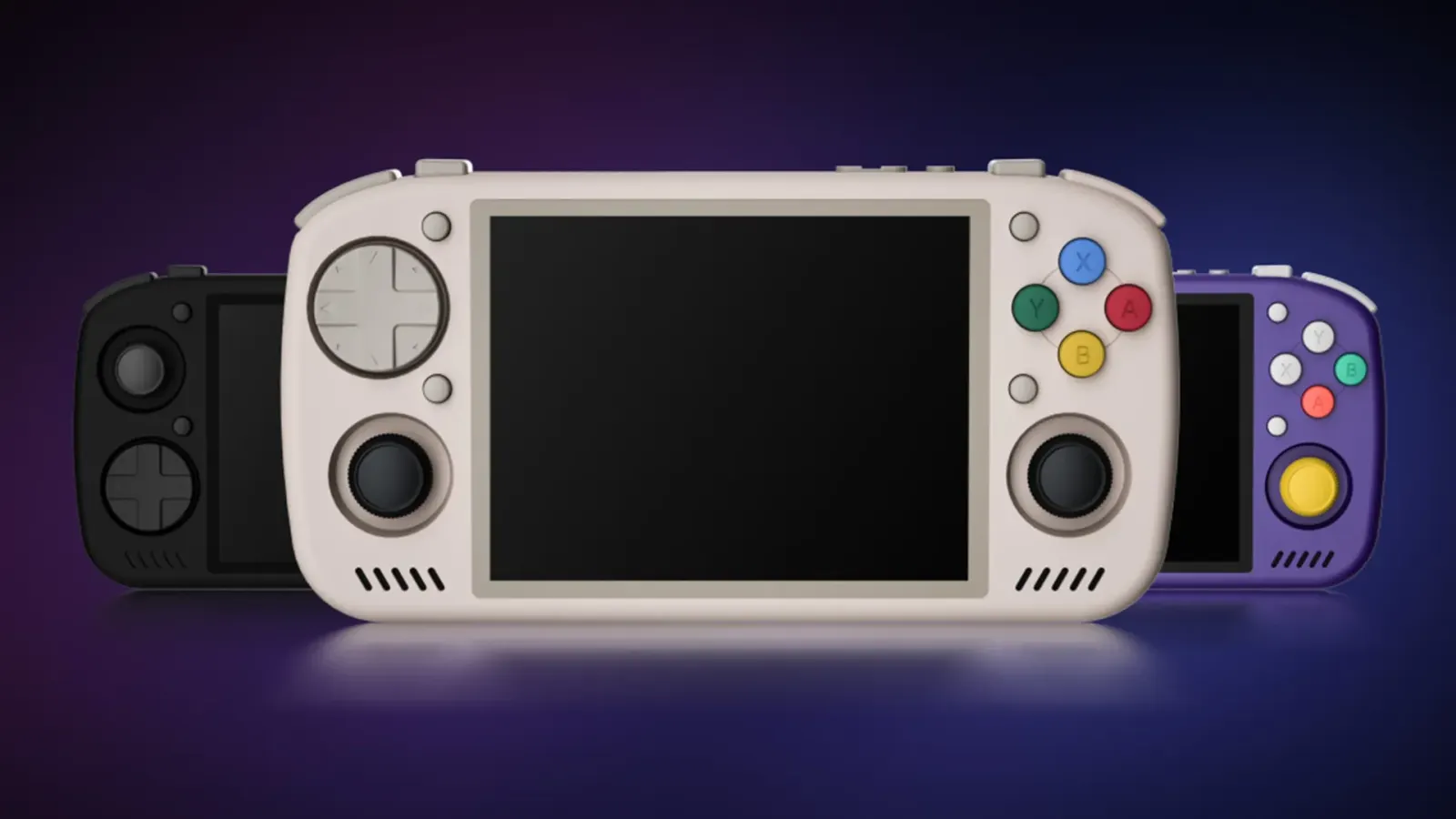
The KT Pocket KT R2 3:2 is a 2026 Android emulation handheld built around the MediaTek Dimensity 7300, and its pitch rests on two unusual choices: a tall 4.5-inch 1620×1080 IPS panel in a 3:2 shape, and a chassis you can order in plastic, aluminum alloy, or magnesium alloy. KT Pocket also sells the same R2 with a boxy 4:3 4.2-inch screen; the 3:2 version here trades some retro-purist framing for sharper text, more vertical room, and a display that suits PSP, PS2, and Android games better than 4:3 does. Pre-orders opened near $140 for the base configuration, which undercuts most Dimensity-class rivals.
Emulation performance, generation by generation
The Dimensity 7300 is a 4nm octa-core chip: four Cortex-A78 cores up to 2.5GHz paired with four A55 efficiency cores, and a two-core Mali-G615 MP2 GPU. That split matters. The CPU is genuinely quick, but the GPU is the modest part, and it sets the ceiling. Everything through the easier sixth-generation tiers is effortless. NES, SNES, Genesis, Game Boy Advance, PS1 (DuckStation), N64 (Mupen64Plus FZ), Dreamcast (Redream or Flycast), Saturn (Yaba Sanshiro 2), and PSP (PPSSPP) all run at full speed, and the 1080p panel lets you upscale PS1 and PSP cleanly. Nintendo 3DS through Azahar is playable across most of the catalog. Arcade boards through MAME and FinalBurn Neo run without complaint, and PICO-8 titles are trivial, though PS Vita emulation via Vita3K remains too unreliable to count on.
The real fights are GameCube, PS2, and Wii. Dolphin leans on the CPU, which the 7300 supplies, so lighter GameCube titles like Wind Waker, Mario Sunshine, and Metroid Prime are enjoyable; but GPU-bound showpieces such as F-Zero GX and Rogue Squadron drop frames, and Mali drivers still throw the occasional Vulkan rendering glitch. PS2 through AetherSX2 or a NetherSX2 build tells the same story: a large slice of the library runs at native or 2x resolution, while the heavier 3D games stutter under that two-core GPU. This is not the flawless PS2 machine that a Snapdragon 8 Gen 2 device such as the Retroid Pocket 5 or AYN Odin 2 is, and it should not be sold as one. Switch emulation is off the table here, both because the GPU is too small and because that scene has largely collapsed.
Screen, build and controls
The 4.5-inch 1620×1080 IPS screen is the headline. At roughly 432 ppi with 550 nits, full lamination, and a tempered-glass cover, it is bright and dense for the class, though it remains a 60Hz panel rather than a high-refresh one. The 3:2 ratio wastes less glass than 16:9 on retro content while giving PSP and Android games more usable area than 4:3. Physically the unit is 169.6 x 79.8 x 17.2mm and about 264g, so it is a two-hand, backpack-not-pocket device. The controls are the right shape: clickable Hall-effect analog sticks that will not drift, a d-pad, and full shoulders with analog L2/R2 triggers. Dual linear-motor rumble, a gyroscope, front-firing stereo speakers, and a 3.5mm jack round it out, and there is active cooling with a heat pipe to keep the 7300 from throttling.
Software and setup
The R2 runs KOS, KT Pocket’s skin over Android 14, and that framing is important. This is an Android handheld, not a Rockchip or Allwinner Linux box, so the familiar custom-firmware names simply do not apply: muOS, Knulli, ArkOS, ROCKNIX, OnionOS, and Batocera are Linux images for other hardware and will not flash to a Dimensity device. Your setup is therefore a software layer, not a new OS. Install standalone emulators and RetroArch from the store, then organize everything behind a frontend like Daijisho or EmulationStation DE so the launcher feels console-like instead of phone-like. The upside of Android is Wi-Fi 6, Bluetooth 5.3, an optional 4G model, the Play Store, streaming apps, and native Android games; the downside is the usual per-emulator fiddling and no single tidy retro OS to fall back on.
Price, value and who it is for
Configurations run from roughly $140 for 6GB/128GB Wi-Fi up to around $289 for a 12GB/512GB 4G unit in a premium metal shell, with the 6920mAh battery and 33W charging shared across the range. That pricing is the strongest argument for the R2: a laminated 1080p 3:2 screen, Hall sticks, active cooling, and a metal-shell option at this cost is a lot of hardware. Buy it if you want a sharp, sub-$200 Android handheld that eats everything up to PSP, Dreamcast, and 3DS and dabbles competently in GameCube and PS2. Skip it if PS2 and GameCube are your main event, where a Snapdragon 8-class device is worth the extra money, or if you specifically want a plug-and-play Linux retro OS, because on this chip that option does not exist. One caveat: KT Pocket is a small brand with a repeatedly slipped ship date, so treat pre-order timelines and long-term firmware support with appropriate caution.
📐 Size & Pocketability
⚖️ Weight vs Other Handhelds
🔋 Real-World Battery Estimator
⭐ Emulation Performance
📊 View How This Score is Calculated
The Hardware Power Score is an absolute metric. Perfect emulation of difficult, modern consoles awards significantly more points than standard retro consoles.
- 15× Multiplier: Modern PC
- 12× Multiplier: Switch, PS3, Xbox 360
- 10× Multiplier: Wii U
- 8× Multiplier: PS2, GameCube, Wii, Xbox
- 5× Multiplier: Saturn, Dreamcast, PSP
- 3× Multiplier: N64, PS1
- 1× Multiplier: SNES, GBA
Gen 8 & PC
Generation 7
Generation 6
Generation 5
Handhelds & Retro
⚡ Performance Benchmarks
Where KT Pocket KT R2 3:2 Mali-G615 MC2 lands against the handhelds everyone knows. Every bar shares one scale, so longer genuinely means faster — add up to two rivals to compare.
CPU = Geekbench 6 multi-core · GPU = 3DMark Wild Life. Median real-world scores; every bar shares one scale — add up to two rivals to compare.
📋 Full Specifications
📺 Display
⚙️ Platform
💾 Memory
🕹️ Controls
📏 Body
🔋 Battery
⚖️ Verdict
✅ The Good
- Fully laminated 4.5-inch 1620×1080 IPS 3:2 screen at 550 nits and about 432 ppi, bright and dense for the price
- Fast Dimensity 7300 CPU, drift-proof Hall-effect sticks, analog L2/R2 triggers, and active cooling with a heat pipe
- Large 6920mAh battery with 33W fast charging, plus cheap aluminum or magnesium shell options
- Android 14 (KOS) adds Wi-Fi 6, optional 4G, the Play Store, streaming and native games; base config starts near $140
❌ The Bad
- The two-core Mali-G615 MP2 GPU is the bottleneck: PS2 and GameCube run only a partial library and Switch is out of reach
- No Linux retro-firmware path, muOS, Knulli, ArkOS and ROCKNIX do not run on this chip, so setup means configuring Android emulators by hand
- Small, unproven brand with repeatedly slipped ship dates; the 264g, 17.2mm, 60Hz body is bulky and not pocketable
📰 Latest News & Guides
The Ultimate Guide to ARMSX3: Android’s New PS3 Emulator, Competitor Comparisons, and Setup Tutorial
18/08/2026Pokémon Gold, Silver, and Crystal (Gen 2) Recomp Lands on Android
17/08/2026How to Play the Pokémon Red, Blue, or Yellow Recomp on Your Android, Windows, and Linux Devices
16/08/2026🔍 Similar Handhelds
Other handhelds that emulate up to PS2.