
🛒 Where to Buy
⚠️ Golden Rule of Retro Handhelds: Throw away the cheap MicroSD card that comes in the box — it will fail. And never use a high-wattage PD “Fast Charger” on these devices; it can damage the battery. Use a standard 5V/1.5A brick.
Device Overview: AYN Odin 3
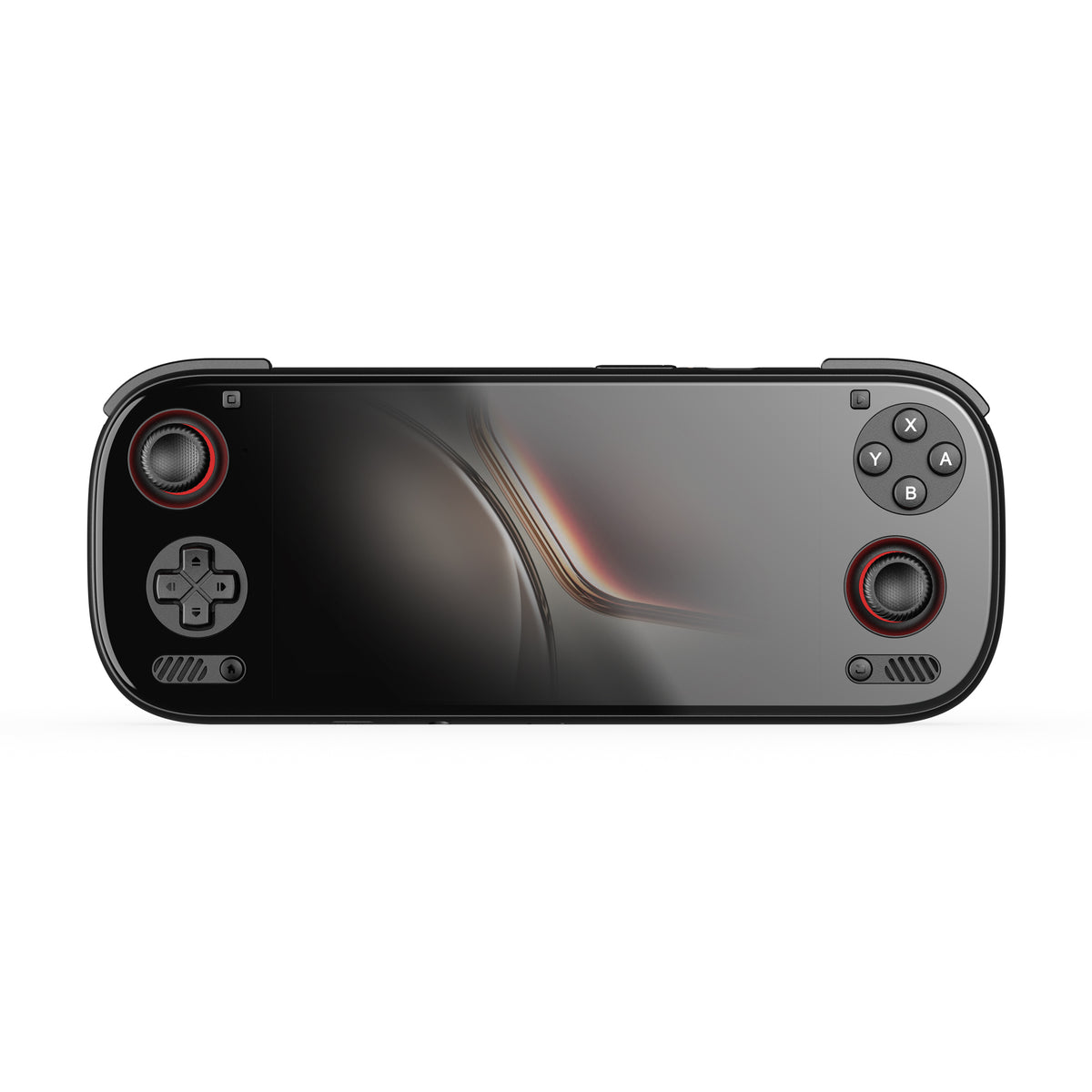
The AYN Odin 3 is the sequel to the device that made Android handhelds credible for serious emulation, and AYN’s pitch this time is blunt: put the fastest mobile silicon on the market into a controller and undercut everyone on price. It launched on Indiegogo in September 2025 at $299 for the base 8GB/128GB unit, a number that reads like a typo next to the class of parts inside it. There is one honesty caveat worth stating up front. AYN advertised the Odin 3 as the first Snapdragon 8 Elite handheld, then clarified that it actually ships with Qualcomm’s Dragonwing Q8, an industrial-market variant of the 8 Elite that drops the 5G modem and camera ISP. Neither of those matters in a device with no SIM slot and no camera; it keeps the same Oryon CPU cores and Adreno 830 GPU. The marketing was sloppy, the hardware is not.
Emulation performance, generation by generation
This is the strongest emulation chip you can buy in an Android handheld today, and it behaves like it. Everything through the sixth generation is a non-event: PS1, N64, Dreamcast, PSP and DS run at full speed with heavy internal-resolution upscaling and shaders to spare, PPSSPP pushing PSP titles to 3x with no drama. GameCube and Wii through Dolphin are essentially solved, with demanding cases like F-Zero GX and the Metroid Prime trilogy holding full speed at 2x or higher. PS2 is where the Odin 3 pulls clear of cheaper hardware: with AetherSX2 or the NetherSX2 fork, the large majority of the library runs at 1080p, and games that stuttered on a Snapdragon 8 Gen 2 now sit at a locked 60. The 3DS via Citra forks such as Azahar or Lime3DS runs full speed with upscaling.
The frontier is exactly where you would expect. Switch emulation, using Yuzu-derived forks like Eden or Citron, runs a real chunk of the catalogue but remains driver-dependent and buggy, so treat it as promising rather than finished. PS3 through experimental ARM ports of RPCS3 is a tech demo, good for a handful of lighter titles and little else. Windows x86 games are possible through Winlator, GameNative and GameHub, which stack Wine, Box64 and Turnip drivers to translate PC titles, and indie or older 3D games like Enter the Gungeon and Bomb Rush Cyberfunk do run. But this is translation running on top of Android, not a native Windows box, and the overhead shows. If you want a Steam library, buy a Steam Deck; if you want the best ARM emulator, this is it.
Screen, build and controls
AYN kept the 6-inch form factor but swapped the Odin 2’s 60Hz IPS panel for a 1920×1080 AMOLED at 120Hz, and it is the single biggest quality-of-life upgrade: inky blacks for retro content and high refresh for the Android UI and native games. The sticks are Hall effect with full-size caps and thicker shafts than the Odin 2, so drift is a non-issue, and the triggers are analog and noticeably wider. An 8,000mAh battery is enormous for this class and pairs with 60W charging. At 390g the Odin 3 is a two-handed slab, not a pocket device, and it has an active fan; reviewers note the whine is audible under sustained load, and the glass front, while attractive, is a scratch and shatter liability.
Software and setup
The Odin 3 ships on Android 15 with AYN’s own launcher, and for most buyers that is the whole story: install RetroArch or standalone cores, add a front end like Daijisho or ES-DE, and go. This is not the SD-card custom-firmware world of muOS, Knulli or ROCKNIX; those Linux distributions target cheap Rockchip and Allwinner boards, not Qualcomm flagships. What the Odin 3 has instead is a mainline Linux effort that gained preliminary support in 2026, which points toward eventual Batocera-style options, but for now Android is the platform. Practically, setup means sideloading the emulators AYN cannot bundle for licensing reasons and pointing them at your ROMs.
Price, value and who it is for
At $299 for the base configuration the Odin 3 is close to unreasonable value, and the tiers climb through 12GB/256GB and 16GB/512GB to a 24GB/1TB Ultra near $519. For pure emulation the base 8GB model is plenty; the extra RAM and storage matter only if you lean hard on Winlator or hoard a massive library. This is the device to buy if you want a no-compromise Android emulation handheld and can live with a 390g footprint, an audible fan, and the reality that Switch and PC support are still works in progress. Buyers who want something pocketable, or who want a mature Linux custom firmware today, should look elsewhere, but nothing else at this price emulates through PS2 and GameCube as cleanly.
📐 Size & Pocketability
⚖️ Weight vs Other Handhelds
🔋 Real-World Battery Estimator
⭐ Emulation Performance
📊 View How This Score is Calculated
The Hardware Power Score is an absolute metric. Perfect emulation of difficult, modern consoles awards significantly more points than standard retro consoles.
- 15× Multiplier: Modern PC
- 12× Multiplier: Switch, PS3, Xbox 360
- 10× Multiplier: Wii U
- 8× Multiplier: PS2, GameCube, Wii, Xbox
- 5× Multiplier: Saturn, Dreamcast, PSP
- 3× Multiplier: N64, PS1
- 1× Multiplier: SNES, GBA
Gen 8 & PC
Generation 7
Generation 6
Generation 5
Handhelds & Retro
📋 Full Specifications
📺 Display
⚙️ Platform
💾 Memory
🕹️ Controls
📏 Body
🔋 Battery
⚖️ Verdict
✅ The Good
- Dragonwing Q8 (Snapdragon 8 Elite-class) with Adreno 830 is the fastest emulation silicon in any Android handheld; PS2 and GameCube run essentially solved at 1080p
- 6-inch 1920×1080 AMOLED at 120Hz is a major upgrade over the Odin 2's 60Hz IPS panel
- Hall-effect sticks (no drift) plus wider analog triggers and a large 8,000mAh battery with 60W charging
- Aggressive pricing, with a $299 base unit that puts flagship silicon within reach
❌ The Bad
- Heavy at 390g and not pocketable, with an active fan whose whine is audible under sustained load
- Android-only in practice today: no mature custom-firmware path (muOS/Knulli/ROCKNIX do not target it) and emulators must be sideloaded
- Switch, PS3 and Winlator/PC emulation remain buggy works-in-progress, and AYN's misleading "Snapdragon 8 Elite" marketing needed a public correction
📰 Latest News & Guides
The Ultimate Guide to ARMSX3: Android’s New PS3 Emulator, Competitor Comparisons, and Setup Tutorial
18/08/2026Pokémon Gold, Silver, and Crystal (Gen 2) Recomp Lands on Android
17/08/2026How to Play the Pokémon Red, Blue, or Yellow Recomp on Your Android, Windows, and Linux Devices
16/08/2026🔍 Similar Handhelds
Other handhelds that emulate up to CURRENTGEN.