
🛒 Where to Buy
⚠️ Golden Rule of Retro Handhelds: Throw away the cheap MicroSD card that comes in the box — it will fail. And never use a high-wattage PD “Fast Charger” on these devices; it can damage the battery. Use a standard 5V/1.5A brick.
Device Overview: Anbernic RG-477V
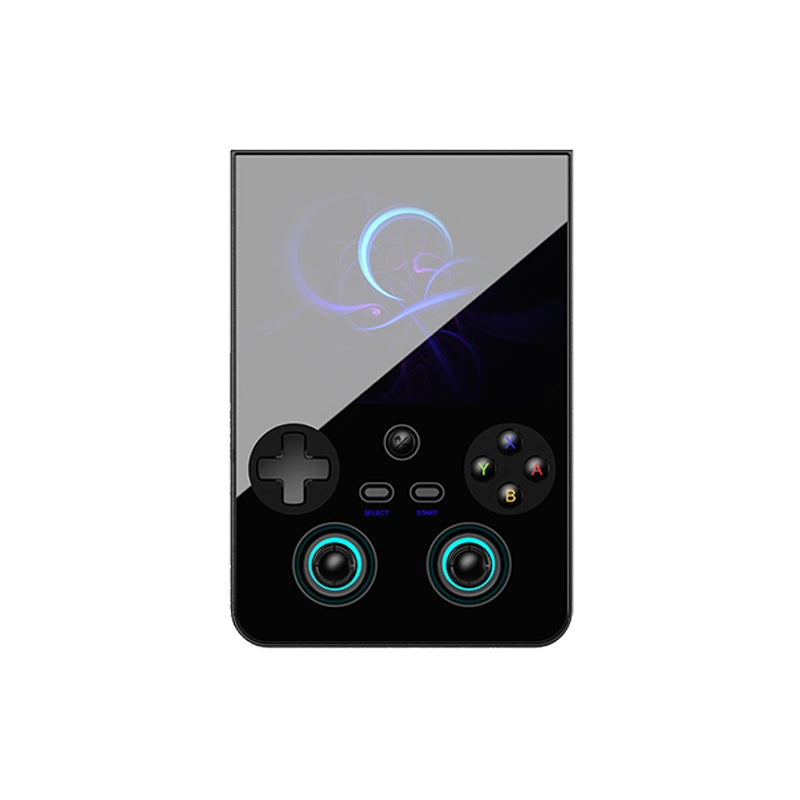
The Anbernic RG-477V is a vertical, Game Boy-shaped Android handheld that Anbernic put on sale on 20 December 2025. It is the plastic sibling to the aluminium RG-477M, sharing that device’s MediaTek Dimensity 8300 chip and 4.7-inch 4:3 screen but shaving the price down and adding active cooling. The portrait layout, tall display and centrally inset thumbsticks make it a deliberate answer to the AYANEO Pocket DMG, except it costs less than half as much. If you grew up holding a console upright rather than sideways, this is the shape Anbernic built for.
Emulation performance, generation by generation
The Dimensity 8300 is a genuinely quick phone-class SoC: an octa-core layout of one Cortex-A715 at 3.35GHz, three more A715 at 3.20GHz and four A510 efficiency cores, paired with a Mali-G615 MC6 GPU on a 4nm process. In practice everything up to the sixth generation runs without a second thought. PS1, N64, Dreamcast, Saturn and the 8- and 16-bit libraries are effortless on DuckStation, Mupen, Flycast and RetroArch cores. The real story is the heavier stuff. GameCube and PS2 run beautifully through Dolphin and NetherSX2, holding full speed and even upscaling on the lowest Auto power profile rather than needing the aggressive Performance mode. Nintendo Switch is the aspirational tier: Eden, the Yuzu successor, runs a meaningful chunk of the library and is a clear step up from the older RG-477M, but the 4:3 panel letterboxes 16:9 Switch and PSP output badly, so you lose a lot of vertical pixels. PSP via PPSSPP is playable with the same caveat. Nintendo DS runs cleanly on melonDS or DraStic, and the 3DS is comfortable through Azahar (the Citra successor), a system that punishes weaker chips but not this one. Where it stalls is Windows-game translation: GameHub and Game Native launched only a handful of titles in testing, because the Mali GPU lacks the mature Vulkan drivers that Adreno-based Snapdragon handhelds enjoy. Treat PC gaming as a bonus, not a reason to buy.
Screen, build and controls
The 4.7-inch LTPS in-cell LCD is the centrepiece: 1280×960 at a native 4:3 ratio, fully laminated under glass, with a 120Hz maximum refresh and black-frame-insertion for cleaner motion. That aspect ratio is the whole point, because retro systems fill it edge to edge with no wasted black bars. The joysticks are 3D Hall-effect units, so drift is not a concern, and there is a six-axis gyro plus 16-million-colour RGB lighting ringing the sticks. The shell is plastic but well assembled at 334g, and the body measures 15.3 by 10.57 by 2.3cm, which makes it pocketable only with a case and a stretch for smaller hands to span in portrait. Two honest ergonomic gripes carry over from hands-on reviews: the new D-pad is accurate but soft and mushy, and the L1/R1 shoulder buttons sit too far outboard, awkward to reach while your thumbs are on the sticks. Twin-stick shooters suffer for it.
Software and setup
This is an Android 14 device, not a Linux retro handheld, and that distinction matters. The Rockchip-era custom firmwares that dominate cheaper Anbernics, muOS, Knulli, ArkOS, ROCKNIX and OnionOS, do not apply here and will not boot on a Dimensity phone chip. What you customise instead is the Android layer. Anbernic ships its own launcher with emulators pre-loaded and pushes FOTA updates over the air, which matter because early units had shaky thermal stability that later firmware largely fixed. Most owners swap the stock frontend for ES-DE, Beacon or Daijisho and drive standalone emulators or RetroArch underneath for a cleaner experience. Because it is ordinary Android with Wi-Fi 6E, you also get the Play Store, streaming apps, Moonlight and native Android games with no flashing at all.
Price, value and who it is for
Anbernic launched the 8GB/128GB model at $199.99 early-bird, settling near $219.99, with a 12GB/256GB version around $259.99 and a $269.99 list price. For most people the 8GB model is the smarter buy, since the extra RAM changes little at this performance tier. The 5500mAh battery is honest: roughly five hours of PS2 or GameCube, seven to ten hours of lighter systems, with a fan and heat pipe keeping the chip in check and stability measured around 93% across repeated stress runs, well ahead of the metal 477M. In the current field it undercuts the AYANEO Pocket DMG, which sells north of $400, while out-emulating the cheaper Retroid Pocket Classic near $149 and Anbernic’s own RG Slide at $199.99 when you push into GameCube and PS2. This is for the retro player who specifically wants a tall, one-console-in-hand form factor and a screen that treats 4:3 games as first-class citizens, and who will spend most of their time at PS2-and-below. If you mainly want widescreen Switch or Windows ports, a landscape Snapdragon handheld will serve you better.
📐 Size & Pocketability
⚖️ Weight vs Other Handhelds
🔋 Real-World Battery Estimator
⭐ Emulation Performance
📊 View How This Score is Calculated
The Hardware Power Score is an absolute metric. Perfect emulation of difficult, modern consoles awards significantly more points than standard retro consoles.
- 15× Multiplier: Modern PC
- 12× Multiplier: Switch, PS3, Xbox 360
- 10× Multiplier: Wii U
- 8× Multiplier: PS2, GameCube, Wii, Xbox
- 5× Multiplier: Saturn, Dreamcast, PSP
- 3× Multiplier: N64, PS1
- 1× Multiplier: SNES, GBA
Gen 8 & PC
Generation 7
Generation 6
Generation 5
Handhelds & Retro
📋 Full Specifications
📺 Display
⚙️ Platform
💾 Memory
🕹️ Controls
📏 Body
🔋 Battery
⚖️ Verdict
✅ The Good
- Dimensity 8300 clears GameCube and PS2 at full speed on the low-power Auto profile, with headroom to upscale
- Native 4:3 1280×960 120Hz laminated LCD fills the screen with retro content instead of pillarboxing it
- Drift-proof Hall-effect sticks, six-axis gyro and real active cooling (fan plus heat pipe) that holds ~93% stress stability
- Full Android 14 with Wi-Fi 6E, Play Store, USB-C DisplayPort output and OTA updates, so streaming and standalone emulators just work
❌ The Bad
- L1/R1 shoulder buttons sit too far out to reach comfortably while using the sticks, and the D-pad feels soft and mushy
- The 4:3 panel heavily letterboxes 16:9 content, so Switch and PSP games surrender a big chunk of screen
- Windows-game translation via GameHub and Game Native barely works because the Mali GPU lacks mature drivers
📰 Latest News & Guides
The Ultimate Guide to ARMSX3: Android’s New PS3 Emulator, Competitor Comparisons, and Setup Tutorial
18/08/2026Pokémon Gold, Silver, and Crystal (Gen 2) Recomp Lands on Android
17/08/2026How to Play the Pokémon Red, Blue, or Yellow Recomp on Your Android, Windows, and Linux Devices
16/08/2026🔍 Similar Handhelds
Other handhelds that emulate up to Switch.