
🛒 Where to Buy
⚠️ Golden Rule of Retro Handhelds: Throw away the cheap MicroSD card that comes in the box — it will fail. And never use a high-wattage PD “Fast Charger” on these devices; it can damage the battery. Use a standard 5V/1.5A brick.
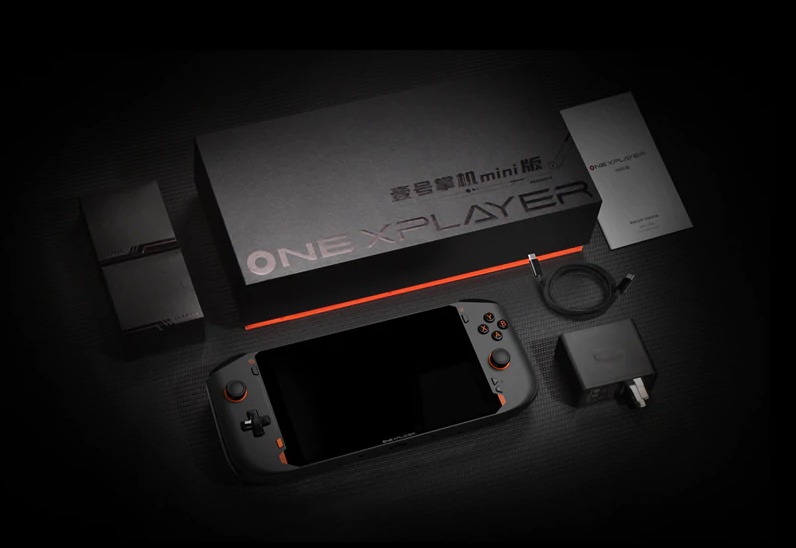
Device Overview: One Netbook One XPlayer Mini
The One Netbook One XPlayer Mini is not an ARM emulation toy. It is a full x86 Windows PC folded into a 7-inch aluminium slab, launched in early 2022 by One-Netbook’s gaming sub-brand. It arrived in two flavours: an Intel Core i7-1195G7 model (4 cores, 8 threads, up to 5.0 GHz, Iris Xe graphics) and an AMD Ryzen 7 5800U model (8 Zen 3 cores, 16 threads, up to 4.4 GHz, Radeon Vega 8). Both carry 16 GB of soldered LPDDR4x-4266 memory and an upgradeable M.2 2280 NVMe SSD in 512 GB, 1 TB or 2 TB trims. Because it runs desktop Windows 11, its ceiling is not set by a fixed emulator list but by watts and thermals, and that changes how you should think about it.
Emulation performance, generation by generation
Everything up to the sixth console generation is trivial here. PS1, N64, Saturn, Dreamcast, PSP through PPSSPP, and GameCube/Wii on Dolphin all run at full speed with upscaling headroom to spare. PS2 through PCSX2 is comfortable, including the demanding racers and platformers, though a handful of notoriously broken titles still need per-game tweaks. The interesting frontier is seventh-gen. Wii U on Cemu is largely playable and often smooth. PS3 on RPCS3 is the classic “it depends” case: 2D and mid-weight 3D games hit 60 fps, but the heaviest titles will chug on a 15 to 28 W APU. Switch emulation was viable here in 2022 through yuzu and Ryujinx, but both projects have since shut down, so treat that as a historical strength rather than a current reason to buy. Xbox 360 via Xenia stays experimental on any hardware. The AMD 5800U’s eight cores give it an edge in CPU-bound emulators; the Intel model’s higher single-thread clock and Iris Xe help elsewhere, but its 3DMark lead does not translate cleanly into emulation frame rates. And because it is a real PC, it also just runs Steam.
Screen, build and controls
The 7-inch, 16:10 IPS panel ships in two resolutions: a sharp 1920×1200 (323 PPI) or a lighter-load 1280×800 (216 PPI). It is a 60 Hz touchscreen with no high-refresh option and no OLED. The chassis is aluminium, weighs 589 g, and feels dense rather than plasticky; at that weight it is noticeably heavier than a Steam Deck, and you feel it in long sessions. Controls are the Mini’s weakest link. The analog sticks and ABXY buttons are ALPS units, meaning potentiometer sticks rather than Hall-effect, so stick drift is a genuine long-term risk, and the later OneXPlayer Mini Pro exists partly to address exactly this. You do get analog triggers, dual rumble motors and a gyroscope. There is no microSD slot, a baffling omission that forces you onto internal M.2 storage or a USB drive. Connectivity is Wi-Fi 6 and Bluetooth 5.0; the Intel model adds a Thunderbolt 4 USB-C port for external GPUs and docks, while the AMD model settles for two USB-C 3.2 ports. A 3.5 mm combo jack and a bundled 65 W GaN charger round it out.
Software and setup
Ignore the muOS, Knulli, ArkOS and ROCKNIX conversation entirely: those firmwares are built for ARM Linux handhelds and will never touch this device. The Mini ships with Windows 11 Home, so “setup” really means Windows optimisation: trimming background services, installing Handheld Companion or the OEM mapping utility to bind the sticks and gyro, and layering a couch front end so you are not stabbing at a desktop taskbar with your thumbs. Most owners land on EmuDeck for Windows, which does run on Windows and not just the Steam Deck, to auto-configure RetroArch and the standalone emulators, then drive everything from Steam Big Picture or Playnite. If you dislike Windows on a handheld, the hardware is standard enough that a Linux console shell such as Bazzite or ChimeraOS is a realistic reinstall, though power management and the ALPS controls will need attention afterwards.
Price, value and who it is for
This is where the Mini stumbles hardest. The AMD version launched at roughly 5,299 CNY (about US$840) in China and $999-and-up globally, while the Intel and Gundam limited editions pushed past $1,200. It did so just as Valve’s $399 to $649 Steam Deck arrived and demolished that price bracket. A 48 Wh battery good for about three hours under full gaming load, plus audible fan noise at high TDP, are the usual x86-handheld compromises. The Mini makes sense for one specific buyer: someone who wants a genuinely pocketable Windows PC for both emulation and native Steam play, values the extra threads of the 5800U for PS3 and Wii U work, and can find a unit used at a sane price. At original MSRP it was hard to justify. On the second-hand market, judged honestly against a Steam Deck or a newer Ryzen 7040/8040 handheld, it is a niche collector’s pick rather than a default recommendation.
📐 Size & Pocketability
⚖️ Weight vs Other Handhelds
🔋 Real-World Battery Estimator
⭐ Emulation Performance
📊 View How This Score is Calculated
The Hardware Power Score is an absolute metric. Perfect emulation of difficult, modern consoles awards significantly more points than standard retro consoles.
- 15× Multiplier: Modern PC
- 12× Multiplier: Switch, PS3, Xbox 360
- 10× Multiplier: Wii U
- 8× Multiplier: PS2, GameCube, Wii, Xbox
- 5× Multiplier: Saturn, Dreamcast, PSP
- 3× Multiplier: N64, PS1
- 1× Multiplier: SNES, GBA
Gen 8 & PC
Generation 7
Generation 6
Generation 5
Handhelds & Retro
📋 Full Specifications
📺 Display
⚙️ Platform
💾 Memory
🕹️ Controls
📏 Body
🔋 Battery
⚖️ Verdict
✅ The Good
- Genuine x86 Windows 11 PC: runs desktop emulators (Dolphin, PCSX2, RPCS3, Cemu) and native Steam games, not just retro ROMs
- AMD Ryzen 7 5800U model's 8 cores and 16 threads give real headroom for CPU-heavy PS3 and Wii U emulation
- Sharp, high-density 7-inch 1920×1200 IPS touchscreen option, denser than most handheld rivals of its era
- User-upgradeable M.2 2280 NVMe SSD up to 2 TB plus a premium aluminium chassis
❌ The Bad
- ALPS potentiometer analog sticks (no Hall effect) carry a real long-term stick-drift risk
- No microSD slot, and only about three hours of gaming battery from 48 Wh with audible fan noise
- Launch pricing ($840 to $1,200+) was uncompetitive against the Steam Deck; only makes sense bought used today
📰 Latest News & Guides
The Ultimate Guide to ARMSX3: Android’s New PS3 Emulator, Competitor Comparisons, and Setup Tutorial
18/08/2026Pokémon Gold, Silver, and Crystal (Gen 2) Recomp Lands on Android
17/08/2026How to Play the Pokémon Red, Blue, or Yellow Recomp on Your Android, Windows, and Linux Devices
16/08/2026🔍 Similar Handhelds
Other handhelds that emulate up to CURRENTGEN.