
🛒 Where to Buy
⚠️ Golden Rule of Retro Handhelds: Throw away the cheap MicroSD card that comes in the box — it will fail. And never use a high-wattage PD “Fast Charger” on these devices; it can damage the battery. Use a standard 5V/1.5A brick.
Device Overview: AYANEO Pocket Vert
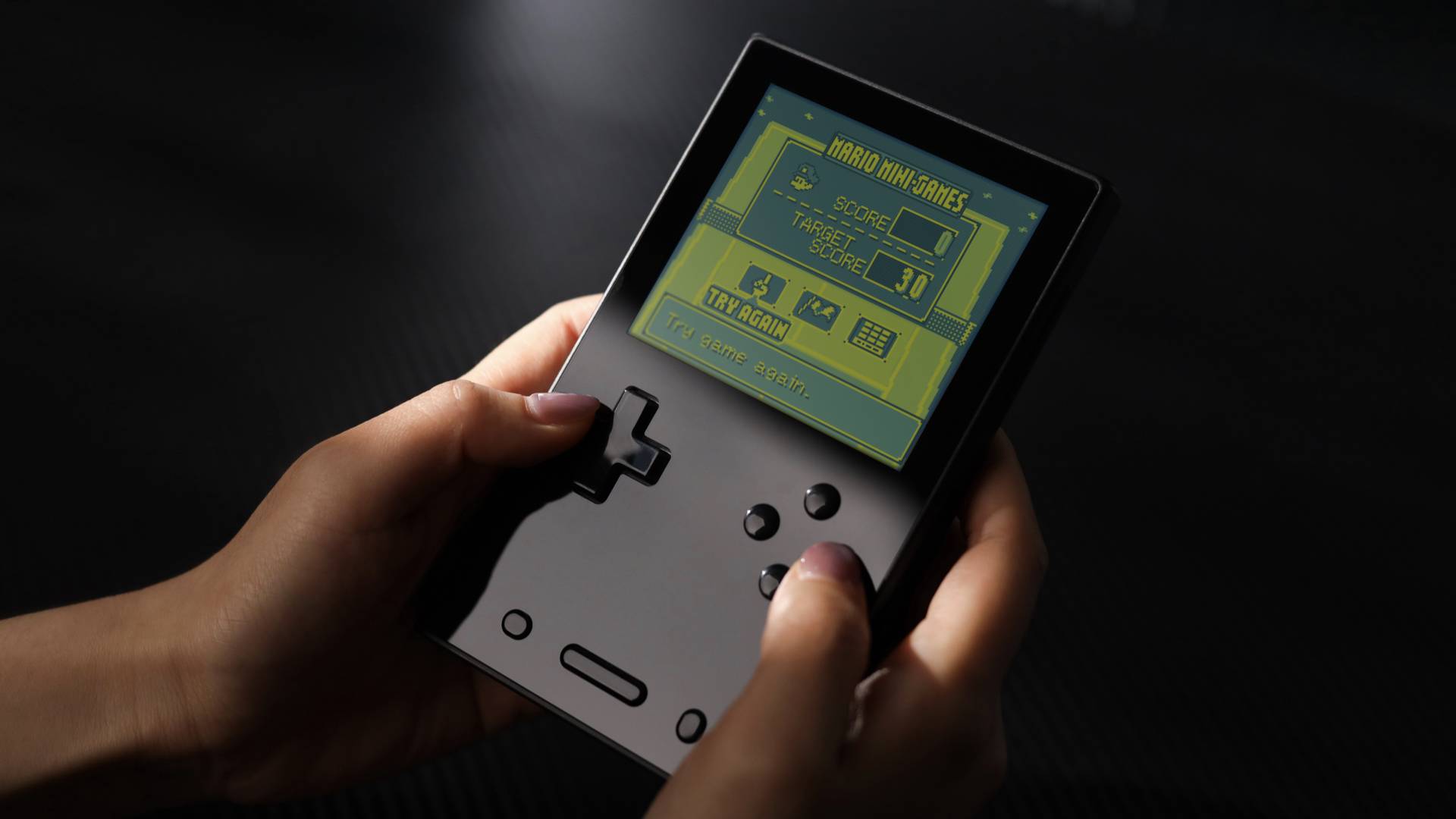
The AYANEO Pocket Vert is a vertical Android handheld built around one idea: the Game Boy silhouette, rebuilt in CNC-milled aluminium with a phone-grade chip inside. It ships with a first-generation Snapdragon 8+ (the Adreno 730 GPU alongside it), 8GB or 12GB of LPDDR5, and a 3.5-inch LCD running an unusual 1600×1440 in a 10:9 tall aspect. That tall screen is the whole thesis. Where nearly every rival is a widescreen slab optimised for 16:9 PSP and PS2 output, the Vert is optimised for the portrait and near-square libraries: Game Boy, Game Boy Color, NES, Game Gear, WonderSwan, and vertical arcade shooters. It went up for pre-order on Indiegogo on 27 December 2025 with early-bird pricing from $269.
Emulation performance, generation by generation
The Snapdragon 8+ Gen 1 is a genuinely fast mobile SoC, so this is not a budget RK3566 toy. Everything up to and including PSP, Dreamcast, N64, Saturn, and the 8- and 16-bit era runs without you thinking about it, at high internal resolutions, through Android emulators like RetroArch, DuckStation, Flycast, Mupen64Plus and PPSSPP. PS1 in particular flies with 2x-4x upscaling and texture smoothing. PS2 via AetherSX2/NetherSX2 and GameCube/Wii via Dolphin are largely playable, but this is a phone chip, not a Steam Deck: the lighter half of the PS2 catalogue holds a solid framerate while the demanding end (Gran Turismo 4, the Shin Megami Tensei games) needs per-game tuning and still stutters. Switch emulation exists on this class of Adreno hardware but treat it as the ceiling, not the pitch, and stick to lighter titles. The honest catch is the display shape. A 10:9 panel is a poor host for 16:9 content, so PSP and PS2 games render in a letterboxed band that leaves the 3.5-inch screen feeling cramped. The Vert is at its best one generation back from where the silicon could theoretically push, running the square and portrait libraries it was designed around.
Screen, build and controls
The 3.5-inch LTPS LCD is sharp at 615 PPI but modest in the ways that matter for a premium price: 60Hz and 450 nits, not OLED and not especially bright outdoors. The build is the highlight. A full-metal CNC body, an integrated glass front, and down-firing speakers that are loud and clean for the size. Then the controls, which are where opinions divide. There are no analog sticks at all: you get a d-pad, ABXY, digital shoulder triggers, and AYANEO’s MagicTouch capacitive sensors standing in for stick and mouse input. For d-pad-era systems that is fine and arguably purer. For anything needing an analog stick the touchpads are a compromise, and reviewers have found them oversensitive and imprecise enough to avoid. There is no Hall-effect stick story here because there are no sticks to give drift; it is a deliberately digital-first device. Rounding out the layout are diamond-cut shoulder keys, four customisable side buttons, a MagicSwitch dial, a side-mounted fingerprint reader and a 9-axis gyroscope for motion-aware games. Weight is 325g, dimensions 143 x 86.4 x 20.5mm, and the 6000mAh battery is large for the footprint.
Software and setup
It runs Android 14 under AYANEO’s own AYASpace/AYAHome/AYASetting layer, and that layer is the weak link. The stock launcher is clunky, so the near-universal first move is to ignore it and install a proper front end. Because this is an Android device rather than a Linux ARM handheld, the custom-firmware ecosystem you would use on an Anbernic or Trimui, muOS, Knulli, ArkOS, ROCKNIX or OnionOS, does not apply here. Your equivalent is the Android emulation stack: Daijisho or ES-DE as a launcher, RetroArch plus standalone cores for the systems, and Winlator or GameHub if you want to poke at light Windows games. Set that up once and the AYASpace roughness stops mattering. Sideloading is straightforward, and full Google Play access means native Android games and cloud-streaming apps run too. Connectivity is current: Wi-Fi 6E, Bluetooth 5.2, a 3.5mm jack, and a full-function USB 3.1 Type-C port with DisplayPort 1.4 output if you want to dock it to a screen.
Price, value and who it is for
At $269 early-bird and $339-plus at retail, the Vert is priced as a boutique object, not a value pick. A cheaper widescreen Android handheld will emulate the same PS2 and PSP libraries more comfortably on a better-shaped screen. What you pay the premium for is specific: the metal Game Boy form factor, the tall high-PPI panel that makes GB, GBC, NES and vertical shmups look genuinely superb, and the choose-your-color CNC finish. Buy it if you mostly play the square and portrait retro libraries and want the nicest possible object to play them on, and if a d-pad-first, stickless layout suits you. Skip it if your backlog is PSP, PS2 or modern 3D, or if you need real analog sticks. It is a stylish, well-built specialist that is honest about what it is and quietly limited outside that lane.
📐 Size & Pocketability
⚖️ Weight vs Other Handhelds
🔋 Real-World Battery Estimator
⭐ Emulation Performance
📊 View How This Score is Calculated
The Hardware Power Score is an absolute metric. Perfect emulation of difficult, modern consoles awards significantly more points than standard retro consoles.
- 15× Multiplier: Modern PC
- 12× Multiplier: Switch, PS3, Xbox 360
- 10× Multiplier: Wii U
- 8× Multiplier: PS2, GameCube, Wii, Xbox
- 5× Multiplier: Saturn, Dreamcast, PSP
- 3× Multiplier: N64, PS1
- 1× Multiplier: SNES, GBA
Gen 8 & PC
Generation 7
Generation 6
Generation 5
Handhelds & Retro
📋 Full Specifications
📺 Display
⚙️ Platform
💾 Memory
🕹️ Controls
📏 Body
🔋 Battery
⚖️ Verdict
✅ The Good
- Snapdragon 8+ Gen 1 with Adreno 730 handles everything up to PSP and Dreamcast effortlessly, with playable-with-tuning PS2 and GameCube
- Genuinely premium CNC aluminium body with integrated glass front and loud, clean down-firing speakers
- Tall 3.5-inch 1600×1440 LCD at 615 PPI makes Game Boy, GBC, NES and vertical arcade shooters look outstanding
- Large 6000mAh battery in a compact 325g Game Boy-style footprint, plus microSD expansion and full Android/Google Play access
❌ The Bad
- No analog sticks at all; the MagicTouch capacitive pads are oversensitive and a poor substitute for anything needing a stick
- The 10:9 screen letterboxes 16:9 content, so PSP and PS2 games feel cramped on the 3.5-inch panel
- Stock AYASpace/AYAHome Android layer is clunky, and at $269-plus early-bird ($339+ retail) it is priced well above better-shaped rivals
📰 Latest News & Guides
The Ultimate Guide to ARMSX3: Android’s New PS3 Emulator, Competitor Comparisons, and Setup Tutorial
18/08/2026Pokémon Gold, Silver, and Crystal (Gen 2) Recomp Lands on Android
17/08/2026How to Play the Pokémon Red, Blue, or Yellow Recomp on Your Android, Windows, and Linux Devices
16/08/2026🔍 Similar Handhelds
Other handhelds that emulate up to Switch.