
🛒 Where to Buy
⚠️ Golden Rule of Retro Handhelds: Throw away the cheap MicroSD card that comes in the box — it will fail. And never use a high-wattage PD “Fast Charger” on these devices; it can damage the battery. Use a standard 5V/1.5A brick.
Device Overview: Retroid Pocket 5
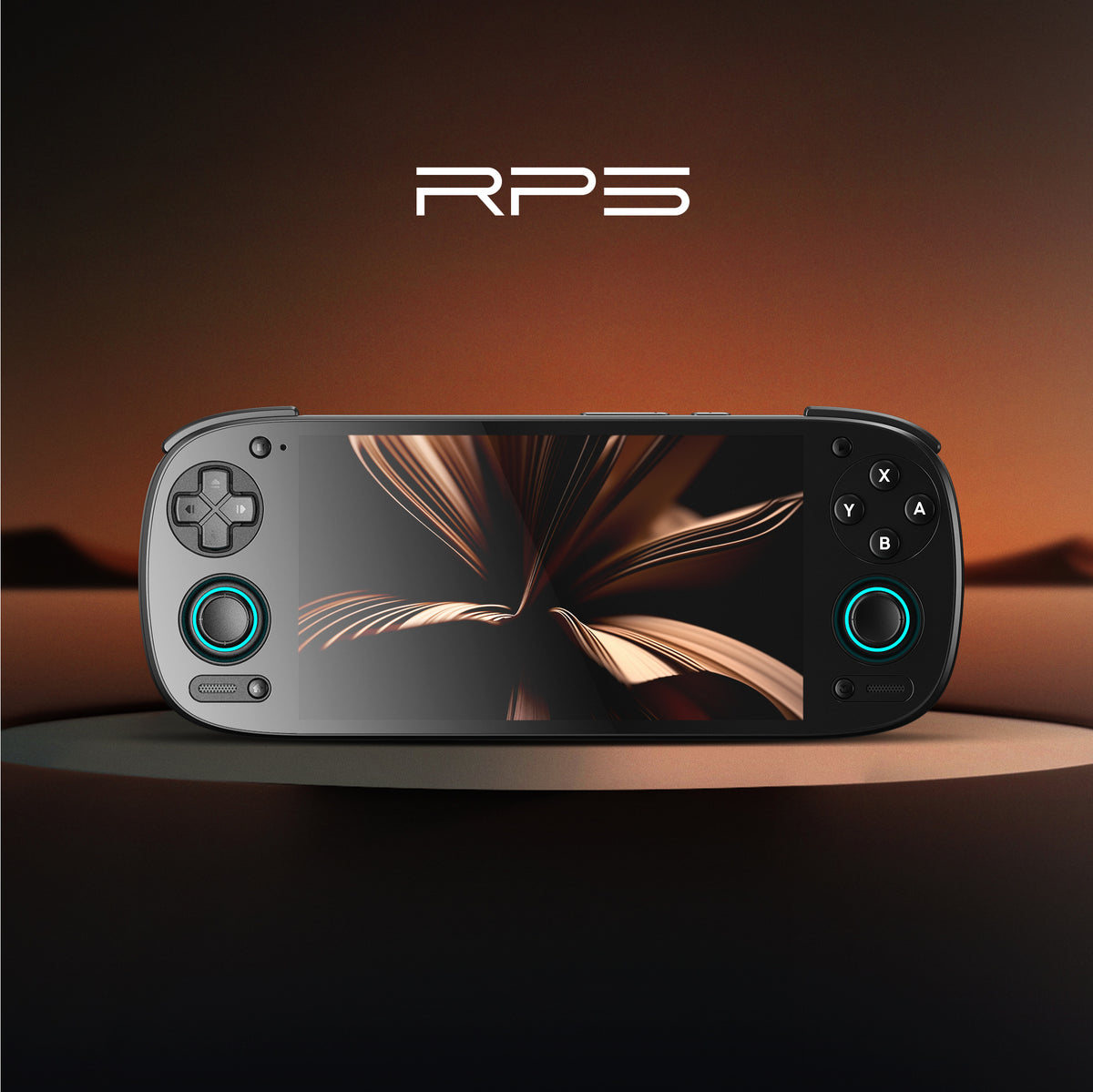
A correction before anything else, because it matters for what you should expect: the Retroid Pocket 5 does not run a Snapdragon 8 Gen 2. It runs a Snapdragon 865 paired with an Adreno 650 GPU — a 2020 flagship phone chip. That single fact frames the whole device. The RP5 is a horizontal Android handheld built around a 5.5-inch 1080p AMOLED panel, 8GB of LPDDR4x, 128GB of UFS 3.1 storage, a microSD slot, and a 5000mAh battery, sold at $199 on sale and $219 regular. Its job is to be the AMOLED-screen, Hall-stick emulation handheld that lands well under $250 — and at that it largely succeeds. If you want raw horsepower, the AYN Odin 2 (Snapdragon 8 Gen 2) and the smaller Retroid Pocket Mini outclass its chip; the Odin 2 simply has more compute for the hardest emulators. The Steam Deck is a different animal entirely — an x86 PC that brute-forces native PC games and the heaviest emulation the RP5 can’t touch. The RP5’s pitch is the screen and the price, not the silicon.
Emulation performance, generation by generation
Everything through the sixth generation is trivial. PS1, N64, Saturn, and Dreamcast in RetroArch run at full speed with room to upscale, and the Adreno 650 chews through PSP in PPSSPP at 2x–3x internal resolution without thinking about it. This is where the RP5 lives most comfortably. PS2 is the first place you start making choices: AetherSX2 (or its NetherSX2 fork) runs the large majority of the library at 2x–3x native, and most games hold full speed, but the genuinely demanding titles — the heaviest 3D action games — need you to drop resolution or accept dips. GameCube and Wii via Dolphin (the MMJR-style optimized builds help here) are broadly excellent, with the usual handful of problem titles. 3DS through Citra/Lime3DS and PS Vita through Vita3K both work on a per-game basis rather than universally — Vita3K in particular is a compatibility lottery, not a guarantee. Wii U via Cemu/Winlator and lighter PC games through Winlator are possible but firmly in tinkering territory. The hard ceiling is real and you should respect it: this is an Android device on a 2020 chip, so PS3 and Xbox 360 are off the table, and Switch emulation through the Android emulators is case-by-case at best — do not buy this to replay your Switch library, because a lot of it simply won’t run well. The honest summary: the RP5 gets you confidently into the sixth generation and most of PS2/GameCube, and treats everything above that as a bonus, not a promise.
Screen, build and controls
The AMOLED is the headline and it earns it. At 5.5 inches and 1920×1080, the black levels are genuinely black, which makes 4:3 retro content sit on screen without the grey bezel glow you get from an IPS panel, and the brightness and contrast beat most LCDs at this price. It’s a 60Hz panel — no high-refresh trickery — but for emulation that’s all you need. The body weighs roughly 280g and measures about 199 x 78 x 16mm; the side grips are more comfortable than the chassis size suggests, enough for long sessions without hand cramp. The sticks are Hall-effect, so stick drift effectively isn’t a concern, and the L2/R2 triggers are analog. The one ergonomic catch reviewers consistently flag: the Vita-style d-pad sits below the left stick, and in stick-heavy games the reach gets awkward. There’s an active cooling fan inside to keep the 865 from throttling under sustained PS2/GameCube load.
Software and setup
This is Android 13, with all the freedom and all the friction that implies. Out of the box you get Retroid’s redesigned launcher, which is fine, but the real setup is the standard Android emulation routine: install standalone emulators (PPSSPP, AetherSX2/NetherSX2, Dolphin, DuckStation, Citra/Lime3DS, Vita3K), point them at your ROM folders, and tune per-system settings yourself. Most people skip the stock launcher and run a frontend — Daijisho or ES-DE — to pull everything into one box-art grid. None of this is plug-and-play; budget an evening to get your library mapped, BIOS files in place, and per-emulator graphics settings dialed. If you’d rather not live in Android, the device has community Linux support (ROCKNIX), which trades app-store convenience for a cleaner, console-like front end and PortMaster access.
Price, value and who it’s for
At $199–$219 you are buying that AMOLED panel and Hall sticks for less than competitors charge for an LCD, and the 865 is more than enough chip for the emulation tier most people actually play. Buy it if you want a premium-feeling screen, your library tops out around PS2/GameCube/Wii/PSP, and you’re comfortable doing per-emulator setup on Android. Skip it if you specifically need strong Switch or heavier emulation — pay up for the Odin 2’s Snapdragon 8 Gen 2 — or if you want native PC gaming, where a Steam Deck is the correct tool. The RP5 is a focused device that knows exactly what it is.
📐 Size & Pocketability
⚖️ Weight vs Other Handhelds
🔋 Real-World Battery Estimator
⭐ Emulation Performance
📊 View How This Score is Calculated
The Hardware Power Score is an absolute metric. Perfect emulation of difficult, modern consoles awards significantly more points than standard retro consoles.
- 15× Multiplier: Modern PC
- 12× Multiplier: Switch, PS3, Xbox 360
- 10× Multiplier: Wii U
- 8× Multiplier: PS2, GameCube, Wii, Xbox
- 5× Multiplier: Saturn, Dreamcast, PSP
- 3× Multiplier: N64, PS1
- 1× Multiplier: SNES, GBA
Gen 8 & PC
Generation 7
Generation 6
Generation 5
Handhelds & Retro
⚡ Performance Benchmarks
Where Retroid Pocket 5 Adreno 650 lands against the handhelds everyone knows. Every bar shares one scale, so longer genuinely means faster — add up to two rivals to compare.
CPU = Geekbench 6 multi-core · GPU = 3DMark Wild Life. Median real-world scores; every bar shares one scale — add up to two rivals to compare.
📋 Full Specifications
📺 Display
⚙️ Platform
💾 Memory
🕹️ Controls
📏 Body
🔋 Battery
⚖️ Verdict
✅ The Good
- Gorgeous 5.5-inch 1080p AMOLED with true blacks that outclass LCD rivals at this price
- Hall-effect analog sticks (drift-immune) plus analog L2/R2 triggers
- Strong $199–$219 value for confident PS1/N64/Dreamcast/PSP and most PS2/GameCube/Wii emulation
- Active cooling fan keeps the Snapdragon 865 from throttling during sustained PS2/GameCube sessions
❌ The Bad
- Snapdragon 865 is a 2020 chip — Switch is hit-or-miss and PS3/Xbox 360 are off the table
- Vita-style d-pad placement below the left stick is awkward in stick-heavy games
- Android setup is hands-on: standalone emulators, BIOS files, and per-system tuning required, not plug-and-play
📰 Latest News & Guides
The Ultimate Guide to ARMSX3: Android’s New PS3 Emulator, Competitor Comparisons, and Setup Tutorial
18/08/2026Pokémon Gold, Silver, and Crystal (Gen 2) Recomp Lands on Android
17/08/2026How to Play the Pokémon Red, Blue, or Yellow Recomp on Your Android, Windows, and Linux Devices
16/08/2026🔍 Similar Handhelds
Other handhelds that emulate up to Switch.