
🛒 Where to Buy
⚠️ Golden Rule of Retro Handhelds: Throw away the cheap MicroSD card that comes in the box — it will fail. And never use a high-wattage PD “Fast Charger” on these devices; it can damage the battery. Use a standard 5V/1.5A brick.
Device Overview: MagicX One 35
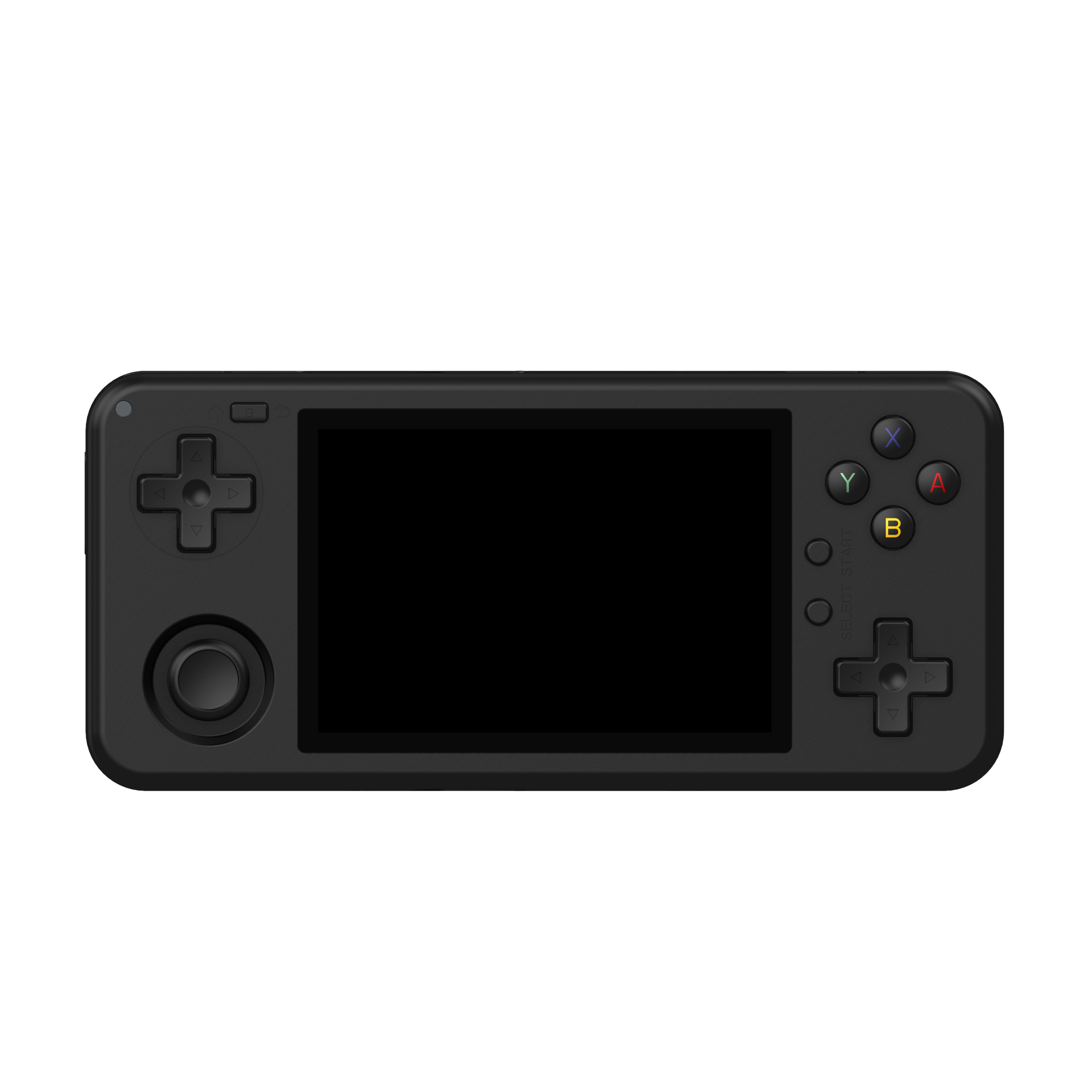
The MagicX One 35 is a pocket-sized Android emulation handheld built around a 3.5-inch 3:2 screen, and its whole reason to exist is that aspect ratio. Most cheap vertical handhelds hand you a squashed 4:3 or a phone-shaped 16:9 panel; the One 35 gives you a 960×640 window that frames Game Boy, GBA, and NES output with almost no wasted glass. MagicX then did something genuinely unusual: it fitted two D-pads and a single analog stick so the thing plays comfortably both horizontally and in vertical TATE orientation. It is a $55-to-$85 device competing with the Miyoo, Anbernic, and Powkiddy crowd, but it runs full Android rather than a stripped Linux distro, which changes the calculus quite a bit.
Emulation performance, generation by generation
The chip is a MediaTek Helio G85: two Cortex-A75 cores at up to 2.0GHz, six Cortex-A55 cores, and a Mali-G52 MP2 GPU. This is a budget phone SoC from 2020, so set expectations at that level rather than treating it like a Steam Deck. Everything through the 16-bit and early 32-bit eras is effortless. NES, SNES, Genesis, Game Boy through GBA, PC Engine, and Neo Geo run at full speed with room to spare, and on this exact screen those libraries look better than they do on most rivals. PS1 via DuckStation is a non-issue, including upscaling to 2x. The interesting tier is N64 (Mupen64Plus FZ), PSP (PPSSPP), and Dreamcast (Flycast): the G85 clears the bulk of each library at or near full speed, though heavier N64 titles and demanding PSP 3D games will need per-game tuning or frameskip. Saturn under Yaba Sanshiro is hit-and-miss as always. Do not expect this device to be a GameCube or PS2 machine. A Dolphin or AetherSX2 demo will boot and a few light 3D titles limp along, but the G85 and its Mali-G52 are the wrong tools for that job, and anyone buying the One 35 for GameCube will be disappointed. Some simpler PS Vita titles are reported playable, but treat that as a bonus, not a use case.
Screen, build and controls
The 3.5-inch IPS panel runs 960×640 at a 3:2 ratio and up to 700 nits, which is bright enough to read outdoors in shade. It is a standard 60Hz LCD, not OLED and not high-refresh, so there is no VRR trickery here, just a clean, well-sized display. The body measures roughly 153x70x19mm and weighs about 189g, which is chunky for its screen size but still genuinely pocketable. Controls are the headline: a single analog stick with decent throw (styled after Retroid and AYN sticks, and not Hall effect, so budget for eventual drift), plus dual D-pads so you always have one under your thumb whether you hold the unit long-ways or upright. Reviewers rate the D-pad pivot as clean with no false diagonals. The shoulder buttons are the weak spot, described as too clicky and awkward to reach in vertical mode, and there is no analog L2/R2 trigger travel to speak of. A USB-C port, microSD slot, and a 3.5mm jack round it out.
Software and setup
It ships with Android 12 under MagicX’s own Dawn Launcher, which is the same front-end template several of these China-market Android handhelds now share. Because it is Android, there is no muOS, Knulli, ArkOS, or ROCKNIX story here: those are Linux firmwares for other chips, and you will not be flashing them onto this MediaTek board. What you get instead is the standard Android emulation stack. Plan on installing RetroArch plus standalone cores such as DuckStation, PPSSPP, Mupen64Plus FZ, and Flycast, and either a front-end like Daijisho or ES-DE to organize everything. The stock experience has rough edges: some emulators launch in the wrong orientation for the control layout and need manual remapping, and Wi-Fi download stability has been flaky in early units. Connectivity is Wi-Fi 5 and Bluetooth 5, so a paired controller or headphones work fine, but do not expect fast large-ROM transfers over the network; use the card. The 4300mAh battery is the other quiet win here, quoted at roughly five to seven hours and realistically delivering that on the light 2D systems this device is best at, since the low-power A55 cores sip current when the demanding cores stay idle.
Price, value and who it is for
Pricing starts at $55 for the 3GB/32GB model and runs to about $85 for the 4GB/64GB version, before shipping. At $55 the value is strong specifically for someone who plays a lot of vertical and 4:3 content and wants that on a sharp 3:2 screen in a pocket. The dual-D-pad TATE trick is the actual selling point, and nothing else at this price does it as thoughtfully. Buy it if your library is heavy on 8-bit, 16-bit, GBA, and PS1, and you value Android’s app flexibility. Skip it if you want Hall-effect sticks, GameCube and PS2, or a polished out-of-box front-end, in which case a Retroid Pocket or a used higher-tier device is the smarter spend.
📐 Size & Pocketability
⚖️ Weight vs Other Handhelds
🔋 Real-World Battery Estimator
⭐ Emulation Performance
📊 View How This Score is Calculated
The Hardware Power Score is an absolute metric. Perfect emulation of difficult, modern consoles awards significantly more points than standard retro consoles.
- 15× Multiplier: Modern PC
- 12× Multiplier: Switch, PS3, Xbox 360
- 10× Multiplier: Wii U
- 8× Multiplier: PS2, GameCube, Wii, Xbox
- 5× Multiplier: Saturn, Dreamcast, PSP
- 3× Multiplier: N64, PS1
- 1× Multiplier: SNES, GBA
Generation 7
Generation 6
Generation 5
Handhelds & Retro
📋 Full Specifications
📺 Display
⚙️ Platform
💾 Memory
🕹️ Controls
📏 Body
🔋 Battery
⚖️ Verdict
✅ The Good
- Excellent 3.5-inch 960×640 3:2 IPS screen at up to 700 nits that frames vertical and 4:3 content with minimal wasted space
- Dual D-pads plus TATE support make it one of the few sub-$100 handhelds genuinely built for vertical play
- Full Android 12 gives access to the entire Android emulation stack (RetroArch, DuckStation, PPSSPP, Flycast) and general apps
- Very low entry price starting around $55, undercutting most Android rivals
❌ The Bad
- Helio G85 tops out around N64/PSP/Dreamcast; GameCube and PS2 are effectively off the table
- Non-Hall analog stick and clicky, awkwardly placed shoulder buttons with no real trigger travel
- Rough stock software: wrong-orientation launches needing remaps and flaky Wi-Fi downloads, with no Linux CFW (muOS/ArkOS/ROCKNIX) available for this MediaTek board
📰 Latest News & Guides
The Ultimate Guide to ARMSX3: Android’s New PS3 Emulator, Competitor Comparisons, and Setup Tutorial
18/08/2026Pokémon Gold, Silver, and Crystal (Gen 2) Recomp Lands on Android
17/08/2026How to Play the Pokémon Red, Blue, or Yellow Recomp on Your Android, Windows, and Linux Devices
16/08/2026🔍 Similar Handhelds
Other handhelds that emulate up to Saturn.