
🛒 Where to Buy
⚠️ Golden Rule of Retro Handhelds: Throw away the cheap MicroSD card that comes in the box — it will fail. And never use a high-wattage PD “Fast Charger” on these devices; it can damage the battery. Use a standard 5V/1.5A brick.
Device Overview: AYANEO Pocket ACE
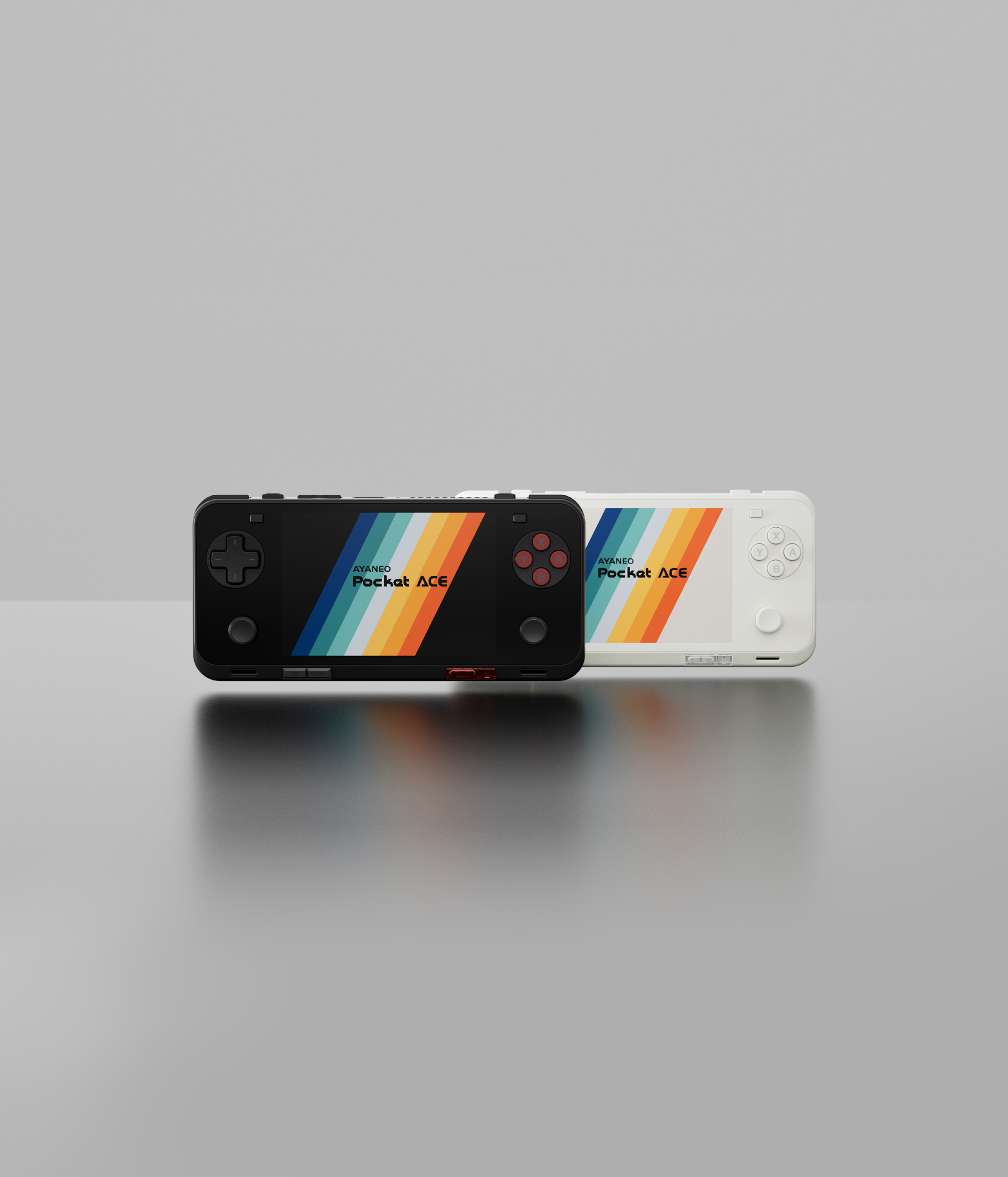
The AYANEO Pocket ACE is a 4.5-inch Android gaming handheld built around Qualcomm’s Snapdragon G3x Gen 2, the same enthusiast-class mobile gaming chip AYANEO already uses in its Pocket S line. What sets the ACE apart is its 3:2 screen and pocketable footprint: at 310 grams it sits between a chunky phone and a full-size handheld, aimed at people who want serious emulation muscle without carrying a Steam Deck. It launched in 2025 through Indiegogo with retail pricing from roughly $459, which immediately puts it in an awkward spot, costing more than most retro handhelds while running the same Android software as far cheaper devices.
Emulation performance, generation by generation
This is a high-end ARM Android SoC, not an x86 PC, and that framing matters for every claim below. The Snapdragon G3x Gen 2 pairs eight Kryo cores (peaking at 3.36GHz) with an Adreno A32 GPU at 1GHz, and AYANEO lets it draw up to 15W. Everything through the sixth generation is effortless: NES, SNES, Genesis, GBA, PS1, N64, Dreamcast and PSP all run full speed with headroom, which is why reviewers report 15-plus hours on lighter systems. PS2 (via AetherSX2/NetherSX2) and GameCube and Wii (Dolphin) are the sweet spot where the chip earns its price, clearing the bulk of both libraries at or near full speed, though demanding GameCube titles still want per-game tweaks. Nintendo Switch is the honest ceiling, and it is inconsistent: using Android forks like Eden, Citron or the older Yuzu, first-party 2D and kart games such as Mario Kart 8 and Bros. Wonder play well, while heavier 3D titles like Metroid Dread can stutter or refuse to boot. Treat Switch as a bonus, not a promise. PS3 and Windows-via-emulation are the weakest area, held back more by immature ARM tooling than by the silicon.
Screen, build and controls
The 4.5-inch panel is the ACE’s signature. It is a 1620×1080 IPS display in a 3:2 aspect ratio, giving 433 PPI and 400 nits with a 130% sRGB gamut. The 3:2 shape is deliberate: it wastes less glass on 4:3 retro content and vertically framed arcade games than a widescreen panel would. It runs at 60Hz and it is IPS, not OLED and not high-refresh, so contrast is merely good rather than inky, and Android Authority flagged minor backlight bleed in dark rooms. Controls are a genuine strength. AYANEO fits medium-throw Hall-effect joysticks and linear Hall-effect triggers, so neither the sticks nor the analog triggers should ever develop drift, plus a proper up-top d-pad and a 0916B linear vibration motor. Active cooling with a copper heatsink and a small fan keeps the chip from throttling during long PS2 and GameCube sessions; the trade-off is audible fan noise and a chassis that runs warm under load.
Software and setup
The ACE ships with Android 13 under AYANEO’s AYASpace interface and AYAHome launcher, which corrals installed games and emulators into a controller-friendly front end. Because this is a Snapdragon Android device, the Linux custom-firmware ecosystem that defines cheaper retro handhelds simply does not apply here: muOS, Knulli, ArkOS, ROCKNIX and Batocera are built for Allwinner and Rockchip Linux boards, not this chip, and there is no EmuDeck either. Your path is Android-native. Most owners sideload standalone emulators (Dolphin, AetherSX2/NetherSX2, DuckStation, the Switch forks) and organise them behind a front end such as ES-DE or Daijisho, which the setup guides walk through. It is more assembly than a drop-in OnionOS card, but Google Play access means you also get native Android games, streaming apps and cloud storefronts that Linux handhelds cannot run.
Price, value and who it is for
Value is where the ACE gets genuinely debatable. Early-bird crowdfunding tiers started near $339 for 8GB/128GB and climbed to around $599 for a 16GB/1TB Retro Power Edition, with expected retail between roughly $459 and $699. At those numbers you are paying AYANEO’s premium for build quality, Hall-effect everything and a distinctive 3:2 screen, while a Retroid Pocket or an AYN Odin on a similar Snapdragon class delivers most of the same emulation for meaningfully less. Buy the Pocket ACE if you specifically want the small 3:2 form factor, top-tier sticks and triggers, and you are comfortable assembling your own Android emulator stack. Skip it if PS2 and GameCube are your realistic ceiling and you would rather spend half as much, or if you were hoping for a plug-and-play Linux CFW experience. This is a premium-priced handheld for an Android tinkerer.
📐 Size & Pocketability
⚖️ Weight vs Other Handhelds
🔋 Real-World Battery Estimator
⭐ Emulation Performance
📊 View How This Score is Calculated
The Hardware Power Score is an absolute metric. Perfect emulation of difficult, modern consoles awards significantly more points than standard retro consoles.
- 15× Multiplier: Modern PC
- 12× Multiplier: Switch, PS3, Xbox 360
- 10× Multiplier: Wii U
- 8× Multiplier: PS2, GameCube, Wii, Xbox
- 5× Multiplier: Saturn, Dreamcast, PSP
- 3× Multiplier: N64, PS1
- 1× Multiplier: SNES, GBA
Gen 8 & PC
Generation 7
Generation 6
Generation 5
Handhelds & Retro
⚡ Performance Benchmarks
Where AYANEO Pocket ACE Adreno A32 lands against the handhelds everyone knows. Every bar shares one scale, so longer genuinely means faster — add up to two rivals to compare.
CPU = Geekbench 6 multi-core · GPU = 3DMark Wild Life. Median real-world scores; every bar shares one scale — add up to two rivals to compare.
📋 Full Specifications
📺 Display
⚙️ Platform
💾 Memory
🕹️ Controls
📏 Body
🔋 Battery
⚖️ Verdict
✅ The Good
- Snapdragon G3x Gen 2 with active cooling clears PS2, GameCube and Wii at or near full speed
- Medium Hall-effect joysticks and linear Hall-effect triggers should never drift
- Sharp 4.5-inch 1620×1080 3:2 IPS screen (433 PPI) suits 4:3 and handheld libraries well
- Android 13 with Google Play adds native games, streaming and cloud storefronts Linux handhelds cannot run
❌ The Bad
- Retail from $459 undercuts its value versus similarly-specced Retroid and AYN Snapdragon handhelds
- 60Hz IPS panel, not OLED or high-refresh, with minor backlight bleed in dark rooms
- No Linux CFW (muOS/Knulli/ArkOS/ROCKNIX); you must build your own Android emulator setup
📰 Latest News & Guides
The Ultimate Guide to ARMSX3: Android’s New PS3 Emulator, Competitor Comparisons, and Setup Tutorial
18/08/2026Pokémon Gold, Silver, and Crystal (Gen 2) Recomp Lands on Android
17/08/2026How to Play the Pokémon Red, Blue, or Yellow Recomp on Your Android, Windows, and Linux Devices
16/08/2026🔍 Similar Handhelds
Other handhelds that emulate up to CURRENTGEN.