
🛒 Where to Buy
⚠️ Golden Rule of Retro Handhelds: Throw away the cheap MicroSD card that comes in the box — it will fail. And never use a high-wattage PD “Fast Charger” on these devices; it can damage the battery. Use a standard 5V/1.5A brick.
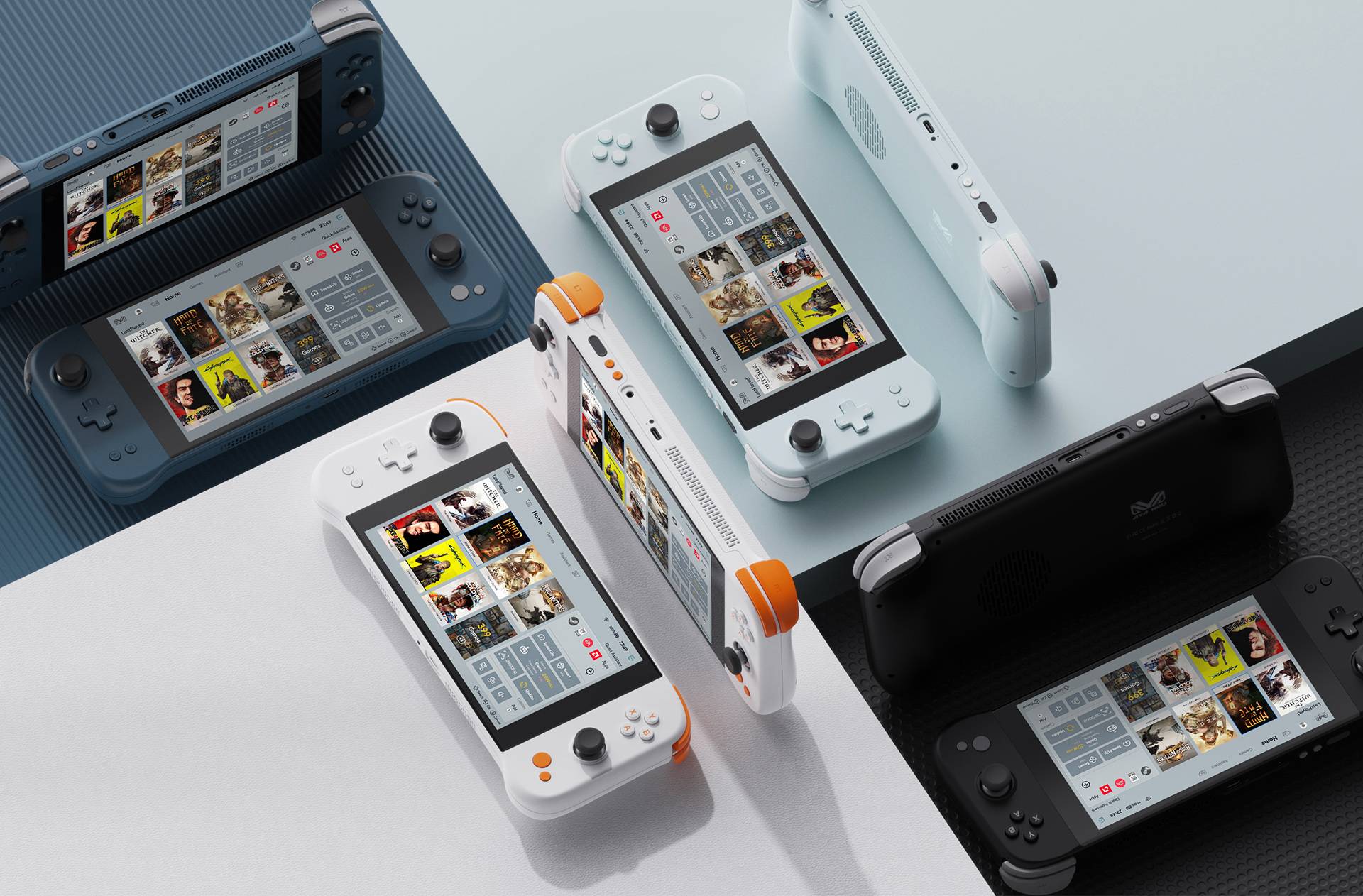
Device Overview: AYANEO Next
The AYANEO Next was AYANEO’s early-2022 flagship, and it is important to be clear about what it actually is: a 7-inch Windows 11 gaming PC with a controller welded to each side, not a low-power Linux emulation console. It runs an AMD Ryzen 7 5825U (the Advance model used the closely related 5800U), an eight-core, sixteen-thread Zen 3 chip built on TSMC’s 7nm process that boosts to 4.5GHz, paired with Radeon Vega 8 graphics clocked at 2000MHz. It shipped before the Steam Deck reached most buyers and cost roughly three times as much, with early-bird Indiegogo pricing starting near $1,285. Its one genuine claim to novelty: it was the first handheld to combine Hall-effect joysticks with Hall-effect triggers, both drift-resistant magnetic sensors rather than carbon potentiometers.
Emulation performance, generation by generation
Because this is a real x86 Windows machine, it emulates like a small gaming laptop rather than a battery-sipping ARM board, and the ceiling is correspondingly high. Everything up to the sixth console generation is trivial: PSP, Nintendo DS, N64, Dreamcast and Saturn run at full speed with heavy upscaling to spare. PS2 (PCSX2), GameCube and Wii (Dolphin) hold locked speed at 2x to 3x internal resolution in nearly all cases. 3DS emulation via Citra and its Azahar successor runs full speed with upscaled output. Wii U through Cemu is comfortably playable across most of the library. The interesting frontier is PS3 (RPCS3) and Switch: the eight Zen 3 cores make RPCS3 genuinely usable, though demanding titles still stutter under the 15-28W power envelope, so it is a per-game gamble rather than a guarantee. Switch emulation was strong here in 2022, but note that Yuzu and Ryujinx were both shut down in 2024; community forks exist, and where they run, the Vega 8 GPU is the bottleneck that pins heavier games near 30fps. As a native PC it also plays your Steam and Epic libraries, typically at 720p low-to-medium settings around 30fps for modern AAA.
Screen, build and controls
The 7.0-inch IPS LCD runs 1280×800 at 215 PPI with five-point capacitive touch. It is bright and sharp for its size, but it is a flat 60Hz panel, so there is no high-refresh mode. The chassis is substantial: 267 x 112 x 22mm and 720 grams, heavier than a Steam Deck and noticeably dense in the hands during long sessions. The controls are the standout. Hall-effect sticks and Hall-effect triggers were unusual in 2022 and still are, and they meaningfully reduce the stick-drift failures that plague potentiometer designs. A fingerprint reader sits in the power button, and stereo speakers flank the display. Cooling relies on an active fan that spins up audibly under load, which is the price of pushing a Zen 3 chip in this thermal envelope.
Software and setup
The Next ships with Windows 11, which is both its strength and its ongoing annoyance. You get an unrestricted desktop OS and total software freedom, but you also get Windows’ touch targets, driver updates and login screens on a 7-inch display, which is fiddly without a mouse. AYANEO’s own AYASpace utility acts as a game launcher and TDP/fan control layer, and it is worth learning because tuning the wattage is how you balance performance against the roughly 47Wh battery. The ARM-Linux custom firmwares that define budget handhelds, muOS, Knulli, ArkOS, ROCKNIX and OnionOS, simply do not apply to an x86 device, so ignore anyone who suggests them here. What is relevant is EmuDeck for Windows, which installs and configures RetroArch plus standalone emulators into one organized front end, or wiping to Batocera (or a SteamOS-style layer like Bazzite) if you want a console-like couch interface instead of the Windows desktop.
Price, value and who it is for
Value is where the Next struggles in hindsight. At $1,285 to roughly $1,535 depending on RAM and storage, it was a premium purchase that the Steam Deck undercut by two-thirds within months while doing most of the same emulation work. It also aged fast: AYANEO’s own Air 1S and later Zen 4/RDNA 3 models made the Vega 8 look dated quickly. That said, the hardware itself is honest. The Hall-effect inputs, dual full-function USB-C ports with DisplayPort 1.4 and 4K60 output, Wi-Fi 6, and 16-32GB of LPDDR4x-4266 hold up fine as an emulation and light-PC machine. Buy one today only on the used market, at a steep discount, if you specifically want a Windows handheld with drift-proof sticks and are content targeting up to Wii U, 3DS and playable PS3 rather than flawless Switch or max-settings AAA. Bargain hunters and anyone wanting a plug-and-play console experience are better served elsewhere.
📐 Size & Pocketability
⚖️ Weight vs Other Handhelds
🔋 Real-World Battery Estimator
⭐ Emulation Performance
📊 View How This Score is Calculated
The Hardware Power Score is an absolute metric. Perfect emulation of difficult, modern consoles awards significantly more points than standard retro consoles.
- 15× Multiplier: Modern PC
- 12× Multiplier: Switch, PS3, Xbox 360
- 10× Multiplier: Wii U
- 8× Multiplier: PS2, GameCube, Wii, Xbox
- 5× Multiplier: Saturn, Dreamcast, PSP
- 3× Multiplier: N64, PS1
- 1× Multiplier: SNES, GBA
Gen 8 & PC
Generation 7
Generation 6
Generation 5
Handhelds & Retro
📋 Full Specifications
📺 Display
⚙️ Platform
💾 Memory
🕹️ Controls
📏 Body
🔋 Battery
⚖️ Verdict
✅ The Good
- Full x86 Windows 11 PC: runs your entire Steam and emulator library natively, with a ceiling reaching Wii U, 3DS and playable PS3 rather than stopping at PS2
- Hall-effect joysticks and Hall-effect triggers together, a genuine drift-resistant durability edge that was a first at launch
- Strong connectivity and build: dual full-function USB-C with DisplayPort 1.4 (4K60 docking), Wi-Fi 6, Bluetooth 5.2 and a bright 215 PPI touchscreen in a solid 720g chassis
- Eight-core Zen 3 5825U with 16-32GB LPDDR4x-4266 drives GameCube, Wii, Wii U and 3DS at full speed with upscaling
❌ The Bad
- Launch pricing of roughly $1,285-$1,535 was steep, and the Steam Deck undercut it by two-thirds within months
- 60Hz 1280×800 panel with no high-refresh mode, and the ~47Wh battery drains heavy titles in about 1.5-2 hours
- Vega 8 graphics are the bottleneck, so demanding PS3, Switch and modern AAA games drop well below 60fps within its 15-28W envelope
📰 Latest News & Guides
The Ultimate Guide to ARMSX3: Android’s New PS3 Emulator, Competitor Comparisons, and Setup Tutorial
18/08/2026Pokémon Gold, Silver, and Crystal (Gen 2) Recomp Lands on Android
17/08/2026How to Play the Pokémon Red, Blue, or Yellow Recomp on Your Android, Windows, and Linux Devices
16/08/2026🔍 Similar Handhelds
Other handhelds that emulate up to CURRENTGEN.