
🛒 Where to Buy
⚠️ Golden Rule of Retro Handhelds: Throw away the cheap MicroSD card that comes in the box — it will fail. And never use a high-wattage PD “Fast Charger” on these devices; it can damage the battery. Use a standard 5V/1.5A brick.
Device Overview: AYANEO 2
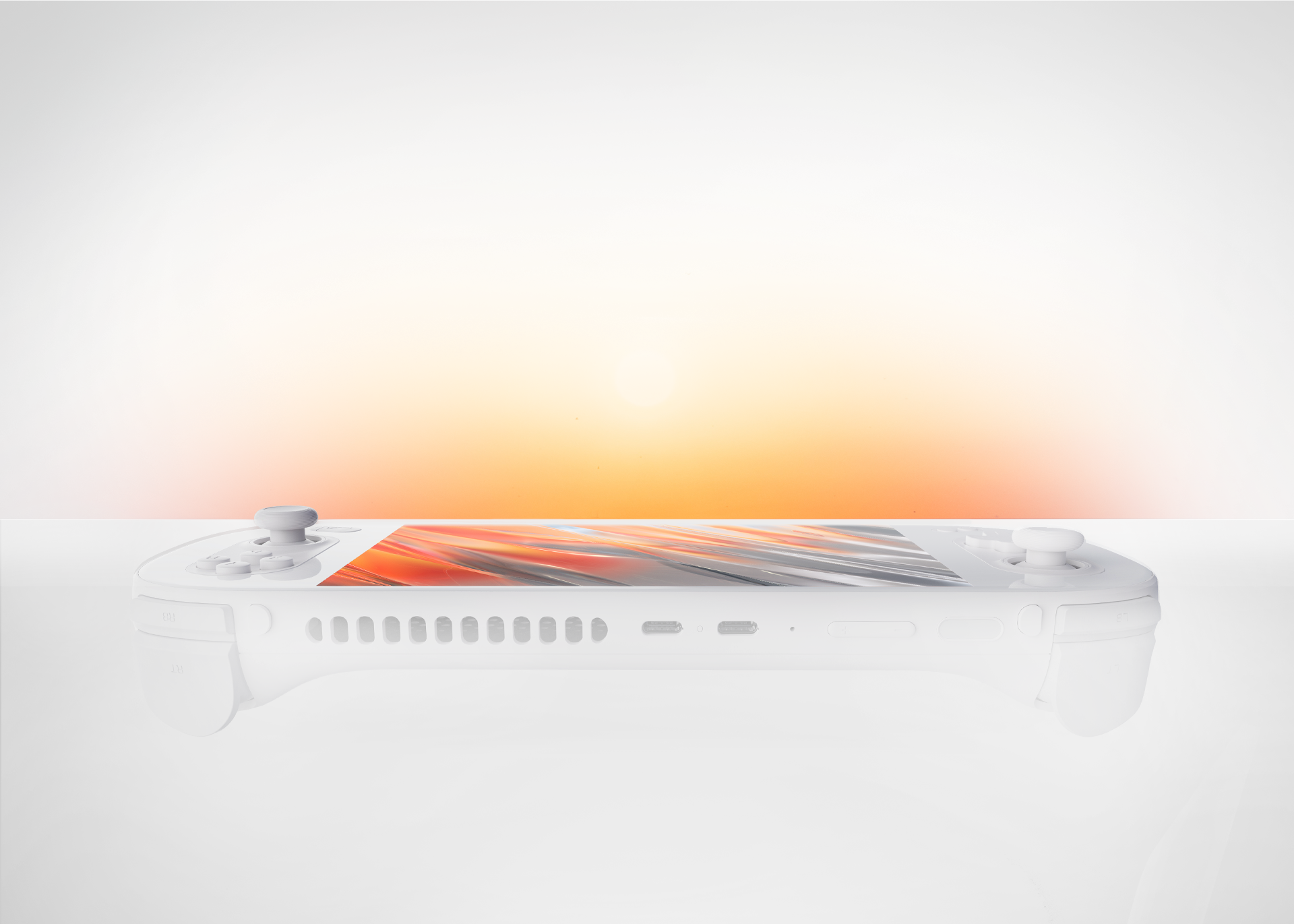
The AYANEO 2 is a Windows 11 handheld gaming PC that shipped in December 2022 at a $1,099 starting price, built around AMD’s Ryzen 7 6800U. It is worth being blunt about what category this belongs to: this is not an ARM emulation box in the Anbernic or Miyoo mould, it is a full x86 computer with a 7-inch screen and gamepad grips molded around it. That single fact sets both its ceiling and its price. Where a $60 retro handheld tops out around PSP and Dreamcast, the AYANEO 2 runs native Steam, Epic and Game Pass titles alongside emulators, and treats sixth-generation consoles as a warm-up. It arrived as one of the more design-focused entries in the first wave of premium Windows handhelds, positioned above the Steam Deck on both specs and cost.
Emulation performance, generation by generation
The 6800U pairs eight Zen3+ cores with the Radeon 680M, a 12-CU RDNA2 integrated GPU rated around 3.4 TFLOPS, which lands it roughly in GTX 1050 Ti territory. In practice everything through the PlayStation 2, GameCube and Wii era runs full speed with upscaling headroom to spare in DuckStation, PCSX2 and Dolphin, and N64, Dreamcast, Saturn, PSP and DS are effectively solved. 3DS via Azahar and PS Vita via Vita3K are comfortable. The interesting work happens higher up. PS3 through RPCS3 is genuinely playable on this chip, though it leans on the CPU and stays title-dependent rather than universal. Wii U in Cemu is a strong showing thanks to that emulator’s maturity. Switch emulation, via Ryujinx forks and the Yuzu-lineage successors that outlived the originals, runs many first-party games at native or higher internal resolution, with the usual shader-compilation stutter on first pass. What it cannot do is PS4 or Xbox One; that hardware is out of reach for any current emulator, so do not buy it expecting eighth-generation console libraries.
Screen, build and controls
The 7-inch IPS panel runs 1920×1200 at 323 PPI, 400 nits, in a no-bezel full-lamination glass front. It is a 60Hz display, not high-refresh, which is a fair omission given the GPU rarely feeds triple-digit frame rates anyway. The 16:10 aspect ratio suits both PC games and upscaled emulation better than a 16:9 screen would. Controls are a highlight: Hall-effect thumbsticks and Hall linear triggers, meaning the two components most prone to wear on cheaper handhelds are the ones least likely to drift or dead-zone here. There is HD linear-motor rumble, a dual gyroscope arrangement, dual microphones, and a fingerprint reader baked into the power button. The trade-off is mass. At 680g and 264.5mm wide, it is a two-handed slab that will tire your wrists in bed, closer to a Switch OLED-plus-grips heft than to a slim retro handheld. Connectivity is a strong point for the price bracket, with three USB-C ports (two of them USB4), Wi-Fi 6, Bluetooth 5.2 and a microSD slot.
Software and setup
Because it ships with Windows 11, the setup reality is different from a Linux-based retro handheld. There is no muOS or ArkOS here; instead you configure a desktop OS to behave like a console. AYANEO’s own AYASpace launcher handles TDP, fan curves and quick settings, and it has improved over time but has never been the most stable layer in the stack. Most owners supplement or replace it with Handheld Companion for gyro-to-mouse and TDP control, and lean on EmuDeck’s Windows installer or a manual RetroArch and standalone-emulator setup to organize ROMs. Playnite is a common front-end for pulling Steam, emulators and storefronts into one couch-friendly grid. Battery management is the daily chore: the 50.25Wh (13050mAh) cell delivers roughly four-plus hours on light 2D emulation and can drop under two hours on demanding native games or heavy Switch emulation, so tuning TDP down to 8-15W is not optional if you want a full session away from the charger.
Price, value and who it is for
The AYANEO 2’s problem in 2022 was the same one that dogs every AYANEO: it cost a lot next to the Steam Deck, which delivered most of the emulation ceiling for a third of the money. What you paid the premium for was industrial design, the anti-fingerprint glass, Hall sticks and triggers as standard, USB4, and the higher-resolution 1200p screen. Today it makes sense mainly on the used market, where its value hinges on price relative to newer 7840U and Ryzen AI handhelds that beat it on Switch and PS3 headroom. It is for the enthusiast who wants a single device that plays native PC games and emulates up to seventh-gen consoles with margin, cares about build quality and stick longevity, and can stomach the weight and the Windows babysitting. Buyers who only want retro emulation up to PSP are drastically overspending here; a cheap ARM handheld does that job for a fraction of the outlay and half the weight.
📐 Size & Pocketability
⚖️ Weight vs Other Handhelds
🔋 Real-World Battery Estimator
⭐ Emulation Performance
📊 View How This Score is Calculated
The Hardware Power Score is an absolute metric. Perfect emulation of difficult, modern consoles awards significantly more points than standard retro consoles.
- 15× Multiplier: Modern PC
- 12× Multiplier: Switch, PS3, Xbox 360
- 10× Multiplier: Wii U
- 8× Multiplier: PS2, GameCube, Wii, Xbox
- 5× Multiplier: Saturn, Dreamcast, PSP
- 3× Multiplier: N64, PS1
- 1× Multiplier: SNES, GBA
Gen 8 & PC
Generation 7
Generation 6
Generation 5
Handhelds & Retro
⚡ Performance Benchmarks
Where AYANEO 2 AMD Radeon 680M lands against the handhelds everyone knows. Every bar shares one scale, so longer genuinely means faster — add up to two rivals to compare.
CPU = Geekbench 6 multi-core · GPU = 3DMark Wild Life. Median real-world scores; every bar shares one scale — add up to two rivals to compare.
📋 Full Specifications
📺 Display
⚙️ Platform
💾 Memory
🕹️ Controls
📏 Body
🔋 Battery
⚖️ Verdict
✅ The Good
- Ryzen 7 6800U with Radeon 680M runs native PC games and emulates comfortably up to PS3, Wii U and Switch
- Hall-effect thumbsticks and Hall linear triggers resist drift and dead-zones by design
- Sharp 7-inch 1920×1200 400-nit no-bezel screen with a game-friendly 16:10 ratio
- Strong connectivity for the class: three USB-C ports (two USB4), Wi-Fi 6, Bluetooth 5.2 and microSD
❌ The Bad
- Heavy at 680g and physically large, tiring for extended handheld sessions
- $1,099 launch price was hard to justify against the far cheaper Steam Deck
- Windows 11 plus the uneven AYASpace layer means more setup and battery babysitting than a Linux retro handheld
📰 Latest News & Guides
The Ultimate Guide to ARMSX3: Android’s New PS3 Emulator, Competitor Comparisons, and Setup Tutorial
18/08/2026Pokémon Gold, Silver, and Crystal (Gen 2) Recomp Lands on Android
17/08/2026How to Play the Pokémon Red, Blue, or Yellow Recomp on Your Android, Windows, and Linux Devices
16/08/2026🔍 Similar Handhelds
Other handhelds that emulate up to CURRENTGEN.