
🛒 Where to Buy
⚠️ Golden Rule of Retro Handhelds: Throw away the cheap MicroSD card that comes in the box — it will fail. And never use a high-wattage PD “Fast Charger” on these devices; it can damage the battery. Use a standard 5V/1.5A brick.
Device Overview: Anbernic RG Nano
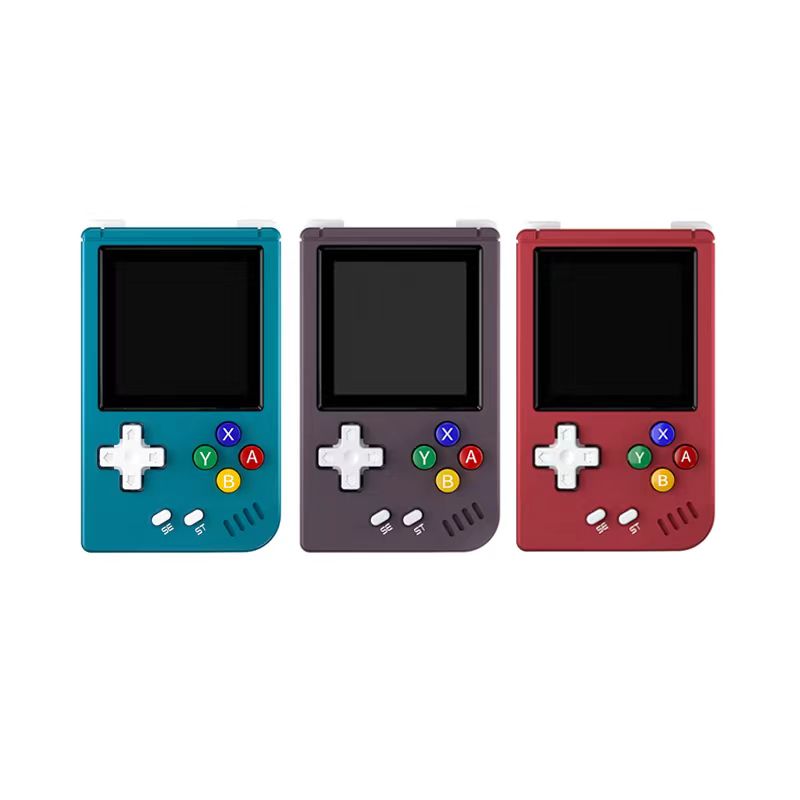
The Anbernic RG Nano is the smallest functioning handheld the company has ever shipped: a metal-bodied keychain console roughly 7.1cm tall with a 1.54-inch square screen and a full set of physical controls shrunk down to fingertip scale. It is a novelty first and an emulator second, and Anbernic barely pretends otherwise. The Nano comes with a keyring loop molded into the chassis. That tells you the intended use: it lives on your bag or your keys, gets pulled out for a few minutes of Tetris or Pokemon, and goes back. Treat it as a collectible curio or a desk toy and it makes sense. Buy it expecting your only handheld and you will be annoyed within an hour.
It sits in a tiny niche of micro handhelds. The FunKey S (clamshell, same square-screen idea) and various sub-$30 “retro keychain” clones from Aliexpress are its real peers. Against those, the Nano’s pitch is build quality and brand: a CNC-cut aluminum shell rather than hollow plastic, and Anbernic’s name on the firmware. What it is not is a competitor to Anbernic’s own RG35XX or RG28XX, which cost about the same money and are vastly more usable. The Nano competes on size alone, and on the novelty of owning the smallest thing in the room.
Emulation performance, generation by generation
The hardware is an Allwinner V3s: a single ARM Cortex-A7 core at 1.2GHz with 64MB of DDR2 RAM on the package. That is genuinely tiny by 2026 standards, closer to a smart doorbell than a game console, and it sets a hard ceiling. The 8-bit era is the comfort zone. NES, Master System, Game Boy and Game Boy Color all run at full speed with no drama, and the square 240×240 panel is a near-perfect match for the Game Boy’s roughly square frame and for Neo Geo Pocket Color. This is what the Nano is for.
The 16-bit tier mostly works. SNES, Mega Drive, PC Engine and Game Gear run, with the heaviest SNES games (the Super FX titles like Star Fox, plus chip-heavy late releases) being the ones that stutter. Then it stops. Game Boy Advance is where the wheels come off: the V3s does not have the headroom to run GBA at a playable framerate, and most coverage lists GBA as effectively a no-go rather than a “light” yes. PlayStation 1 is the same story, only worse, you can boot a few simple titles and watch them crawl at 15-20fps with desynced audio. Do not buy this for GBA or PS1. The honest emulation ceiling is solid 8-bit, mostly-fine 16-bit, and the Game Boy line, full stop.
Screen, build and controls
The 1.54-inch IPS panel is sharp for its size (240×240, about 220ppi) with good color and viewing angles. The catch is the 1:1 square shape. Game Boy and Neo Geo Pocket fit it natively; everything wider has to be letterboxed into a postage stamp or stretched into distortion. On a screen this small, neither option is comfortable for long. You hold the Nano close to your face, and eye strain is real after twenty minutes.
The aluminum shell feels genuinely nice in hand, dense and cold, with a satisfying heft for something this small. The controls are the compromise. There is a real D-pad, four face buttons, Start and Select, and L/R shoulder triggers, all functional and reasonably responsive, but miniaturized to the point where adult thumbs cover multiple buttons at once. Anyone with large hands will struggle. This is a claw-grip, two-fingers-and-a-thumb device, fine for a quick puzzle game and tiring for an action platformer.
Software and setup
Stock firmware is a Linux build using the gmenu2X launcher, drawn from the FunKey OS lineage that several square-screen micro handhelds share. It boots straight to a simple list-based menu, supports per-system folders on the TF card, and includes throwaway extras like a clock and a music player. It is plain but it works, and on hardware this limited, a lightweight launcher is the right call. Storage is microSD only (a 64GB card is bundled, up to 512GB supported); there is no meaningful onboard game storage to speak of.
Custom firmware exists but the scene is small. Because the Nano uses the niche Allwinner V3s rather than the popular H700 found in the RG35XX family, the big community projects (muOS, Knulli, ROCKNIX) do not support it. The main community option is Drum78’s Custom OS, which bundles emulator updates and bug fixes. Useful if you want to tinker, but do not expect the deep ecosystem that the H700 Anbernics enjoy.
Price, value and who it’s for
The Nano lists around $66 and frequently sells near $40. At $40 it is a fun, well-made novelty; at $66 it is hard to justify when the RG28XX and RG35XX cost similar money and do everything better except fit on a keyring. The value math is entirely about how much you weigh “smallest possible.” If you want a usable retro handheld, this is the wrong purchase, get a 3.5-inch Anbernic instead. If you want a conversation piece, a gift for a retro-gaming friend who has everything, or a collector’s oddity that happens to play Game Boy at full speed, the Nano earns its keep. It is a toy, a good one, and priced like a toy only on sale.
📐 Size & Pocketability
⚖️ Weight vs Other Handhelds
🔋 Real-World Battery Estimator
⭐ Emulation Performance
📊 View How This Score is Calculated
The Hardware Power Score is an absolute metric. Perfect emulation of difficult, modern consoles awards significantly more points than standard retro consoles.
- 15× Multiplier: Modern PC
- 12× Multiplier: Switch, PS3, Xbox 360
- 10× Multiplier: Wii U
- 8× Multiplier: PS2, GameCube, Wii, Xbox
- 5× Multiplier: Saturn, Dreamcast, PSP
- 3× Multiplier: N64, PS1
- 1× Multiplier: SNES, GBA
Generation 5
Handhelds & Retro
📋 Full Specifications
📺 Display
⚙️ Platform
💾 Memory
🕹️ Controls
📏 Body
🔋 Battery
⚖️ Verdict
✅ The Good
- Genuinely tiny, well-built CNC aluminum shell with an integrated keychain loop
- Full-speed 8-bit and Game Boy/Game Boy Color emulation, with the square screen matching GB and Neo Geo Pocket natively
- Sharp 1.54-inch 240×240 IPS panel with good color and viewing angles
- Complete physical control set (D-pad, four face buttons, L/R shoulders) rather than a touchscreen, plus microSD up to 512GB
❌ The Bad
- GBA and PS1 are effectively unplayable; the Allwinner V3s ceiling is 8/16-bit and Game Boy only
- Controls and screen are too cramped for comfortable long sessions, especially for larger hands
- Tiny 1050mAh battery (~2.5h) and a thin custom-firmware scene (no muOS/Knulli; only Drum78's Custom OS)
📰 Latest News & Guides
The Ultimate Guide to ARMSX3: Android’s New PS3 Emulator, Competitor Comparisons, and Setup Tutorial
18/08/2026Pokémon Gold, Silver, and Crystal (Gen 2) Recomp Lands on Android
17/08/2026How to Play the Pokémon Red, Blue, or Yellow Recomp on Your Android, Windows, and Linux Devices
16/08/2026🔍 Similar Handhelds
Other handhelds that emulate up to PS1.