
🛒 Where to Buy
⚠️ Golden Rule of Retro Handhelds: Throw away the cheap MicroSD card that comes in the box — it will fail. And never use a high-wattage PD “Fast Charger” on these devices; it can damage the battery. Use a standard 5V/1.5A brick.
Device Overview: Anbernic RG-406V
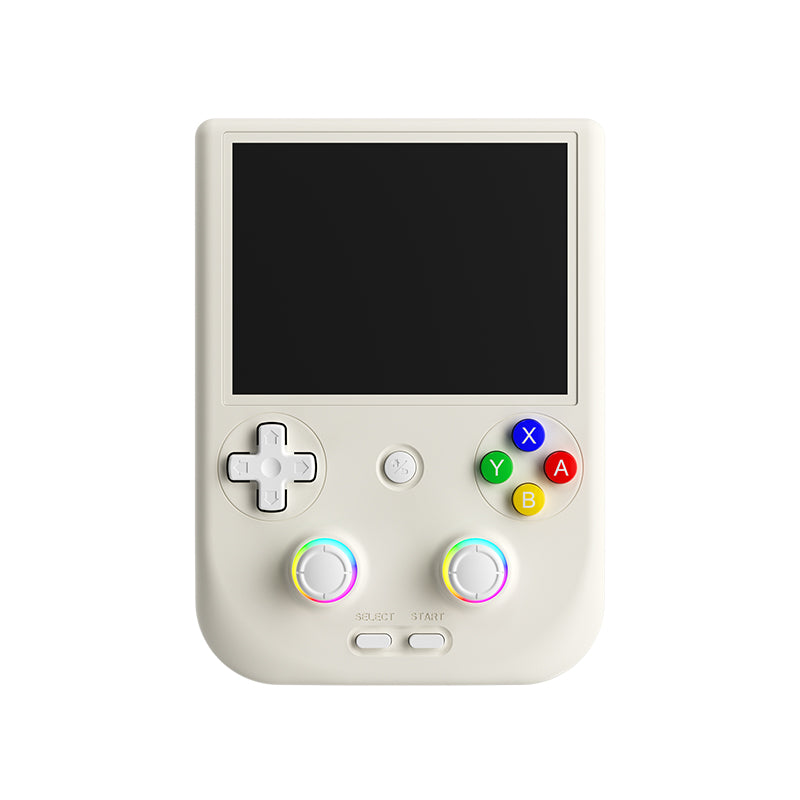
The Anbernic RG-406V is a vertical, Game Boy-shaped Android handheld built around the Unisoc Tiger T820. It shares its internals with the horizontal RG406H and sits a clear rung above the older RK3566-based RG405V it replaces. At $164.99 it aims at buyers who want a tall-grip device for portrait-friendly systems and 4:3 libraries, and who are happy living inside Android rather than a lean Linux launcher. The headline is the 4-inch 960×720 IPS panel: a true 4:3 shape that fills the screen with NES, SNES, Game Boy and arcade output instead of pillarboxing everything.
Emulation performance, generation by generation
The T820 is an eight-core ARM chip (one Cortex-A76 at 2.7GHz, three more A76 at 2.3GHz, four A55 at 2.1GHz) paired with a Mali-G57 MC4 at 850MHz. That is a mid-tier mobile SoC, not a Snapdragon 8-series, and the ceiling reflects it honestly. Everything through the fifth generation is effortless: NES, SNES, Genesis, Game Boy Advance and PS1 through DuckStation run at full speed with headroom for shaders. N64 via Mupen64Plus-FZ, Dreamcast and Naomi via Flycast, and most of the Saturn set are comfortable. PSP on PPSSPP is largely a solved problem, with only the heaviest 3D titles asking for a resolution drop. Nintendo DS (DraStic, melonDS) and 3DS (now Azahar, formerly Citra and Lime3DS) are playable, though 3DS wants per-game tuning. The real wall is the sixth generation. GameCube and Wii on Dolphin, and PS2 on NetherSX2, are firmly “some games, not the catalogue” territory – the T820 gets you further than the RG405V ever did, but it trails Snapdragon devices like the Retroid Pocket 5 or Odin 2 by a wide margin. Buy it for everything up to PSP, and treat GameCube and PS2 as a bonus rather than the reason.
Screen, build and controls
The 960×720 panel is fully laminated (OCA bonded) and is among the sharpest Anbernic has shipped; the 4:3 ratio is the entire point of the vertical layout. Controls are the biggest upgrade over the 405V: dual Hall-effect analog sticks that protrude properly, ringed with RGB lighting, plus a six-axis gyro for motion-aware titles. The shoulder buttons are the catch – L1/R1/L2/R2 are digital, with no analog triggers, which stings on the very GameCube and PS2 games the chip can now attempt. The body measures 145 x 105 x 29mm and weighs roughly 289g, tall and pocketable but chunky. Two more things to know: the speakers fire downward rather than toward you, and DisplayPort video-out over USB-C cannot run at the same time as charging.
Software and setup
It runs stock Android 13, and that matters more than it sounds. The RK3566 Anbernics – the RG35XX line – are the ones with a deep alternative-OS scene: muOS, Knulli, ArkOS, ROCKNIX, Batocera. The Unisoc T820 devices are not part of that world. There is no mature custom Linux firmware for this chip, so you stay on Anbernic’s Android build. In practice that means installing a front end such as Daijisho or ES-DE over RetroArch and the standalone emulators to hide the Android desktop, then side-loading emulators and organizing ROMs yourself. Anbernic ships a preloaded card, but the tidiest result is a clean microSD and your own scrape. EmuDeck’s Android installer and similar community tooling can shortcut the emulator setup. If you specifically want a muOS or Knulli experience, this is the wrong device; if you want the Play Store, streaming apps, RetroAchievements and cloud gaming alongside emulation, it is the right one.
Price, value and who it is for
At around $165 the RG-406V competes on its screen and its stick upgrade more than raw horsepower. The Retroid Pocket 5 costs more and pulls clearly ahead on PS2, GameCube and even Switch; the cheaper RK3566 Anbernics undercut it but cap out near PSP with worse panels and no Android ecosystem. Where the 406V wins is the vertical grip and that crisp 4:3 display, which is genuinely nicer for 8- and 16-bit systems and portrait shmups than a widescreen slab. Buy it if your library lives in the PS1-through-PSP range, you value a tall Game Boy-style hold, and you want Android’s flexibility. Skip it if analog triggers, front-facing sound, or a clean GameCube and PS2 experience are non-negotiable – the chip and the digital shoulders both draw a firm line there.
📐 Size & Pocketability
⚖️ Weight vs Other Handhelds
🔋 Real-World Battery Estimator
⭐ Emulation Performance
📊 View How This Score is Calculated
The Hardware Power Score is an absolute metric. Perfect emulation of difficult, modern consoles awards significantly more points than standard retro consoles.
- 15× Multiplier: Modern PC
- 12× Multiplier: Switch, PS3, Xbox 360
- 10× Multiplier: Wii U
- 8× Multiplier: PS2, GameCube, Wii, Xbox
- 5× Multiplier: Saturn, Dreamcast, PSP
- 3× Multiplier: N64, PS1
- 1× Multiplier: SNES, GBA
Gen 8 & PC
Generation 7
Generation 6
Generation 5
Handhelds & Retro
⚡ Performance Benchmarks
Where Anbernic RG-406V Mali-G57 MP4 lands against the handhelds everyone knows. Every bar shares one scale, so longer genuinely means faster — add up to two rivals to compare.
CPU = Geekbench 6 multi-core · GPU = 3DMark Wild Life. Median real-world scores; every bar shares one scale — add up to two rivals to compare.
📋 Full Specifications
📺 Display
⚙️ Platform
💾 Memory
🕹️ Controls
📏 Body
🔋 Battery
⚖️ Verdict
✅ The Good
- Excellent fully-laminated 4-inch 960×720 4:3 IPS panel that fills the screen for retro systems instead of pillarboxing
- Dual Hall-effect analog sticks plus a six-axis gyro, a genuine control upgrade over the RG405V
- Large 5500mAh battery good for roughly 8 hours of lighter emulation
- Full Android 13 unlocks the Play Store, streaming, RetroAchievements and side-loaded emulators
❌ The Bad
- No analog triggers; L2/R2 are digital, which hurts the GameCube and PS2 games the T820 can finally attempt
- No mature custom firmware for the Unisoc T820, so you are locked to stock Android unlike the muOS/Knulli-friendly RK3566 Anbernics
- Down-firing speakers and USB-C video-out that will not run while the device is charging
📰 Latest News & Guides
The Ultimate Guide to ARMSX3: Android’s New PS3 Emulator, Competitor Comparisons, and Setup Tutorial
18/08/2026Pokémon Gold, Silver, and Crystal (Gen 2) Recomp Lands on Android
17/08/2026How to Play the Pokémon Red, Blue, or Yellow Recomp on Your Android, Windows, and Linux Devices
16/08/2026🔍 Similar Handhelds
Other handhelds that emulate up to PS2.