
🛒 Where to Buy
⚠️ Golden Rule of Retro Handhelds: Throw away the cheap MicroSD card that comes in the box — it will fail. And never use a high-wattage PD “Fast Charger” on these devices; it can damage the battery. Use a standard 5V/1.5A brick.
Device Overview: Anbernic RG-476H
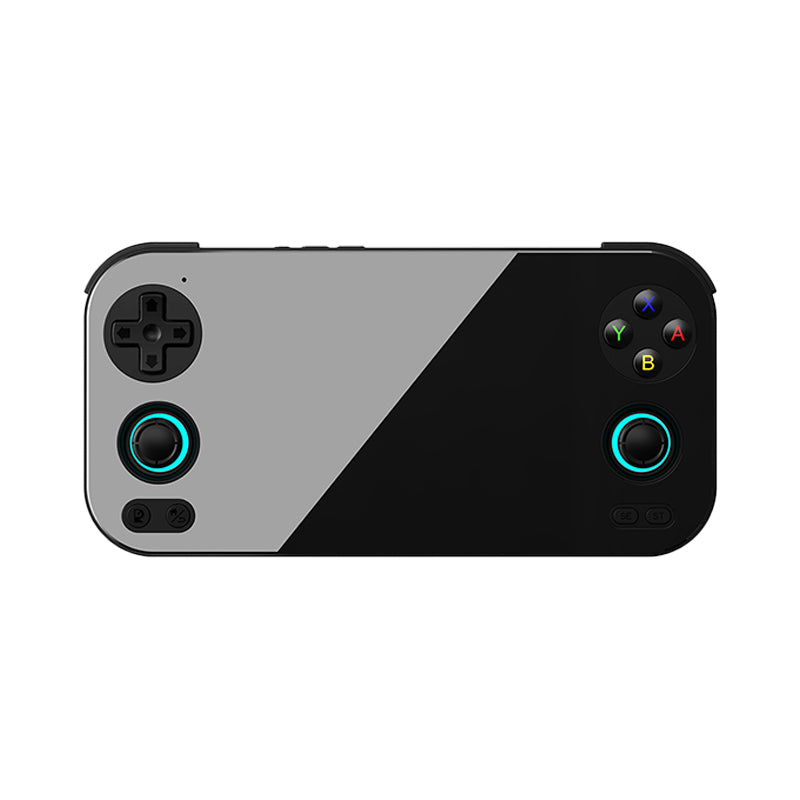
The Anbernic RG-476H landed in September 2025 as a 4.7-inch, 4:3 Android handheld, and the first thing to understand is that it is not a new performance tier. It runs the Unisoc T820, the same 6nm octa-core chip (1x Cortex-A76 at 2.7GHz, 3x A76 at 2.3GHz, 4x A55 at 2.1GHz, Mali-G57 GPU) that Anbernic already shipped in the RG406V, RG406H and the RG Slide. What the $164.99 asking price buys is the shell around that chip: a bezel-less glass front, a genuinely sharp 1280×960 LTPS panel at 120Hz, 8GB of LPDDR4X, and Hall-effect sticks. If you already own a T820 Anbernic, this is a re-skin, not an upgrade.
Emulation performance, generation by generation
Anchor your expectations to the T820 and its quad-core Mali-G57, not to a Windows handheld. Everything through the fifth generation is trivial: NES, SNES, Genesis, Game Boy Advance, PS1 via DuckStation, and Nintendo DS through the standalone melonDS core all run full speed with headroom for shaders and integer scaling on that 960-pixel-tall screen. Dreamcast under Flycast, PSP through PPSSPP at 2x-3x, Saturn via Yaba Sanshiro, and most of the N64 library on Mupen64Plus FZ are comfortable, and the arcade side, including CPS1/CPS2, Neo Geo and mid-weight MAME sets under FinalBurn Neo, runs without complaint. The interesting line sits at PlayStation 2 and GameCube. AetherSX2 (or the NetherSX2 fork) runs a large slice of the PS2 catalogue at native resolution and often 1.5x, and Dolphin handles many GameCube games, but push PS2 to 2x internal resolution or lean on a demanding GameCube title and the T820 runs out of thermal and compute room, so expect dropped frames rather than a locked 60. Wii is hit-and-miss, and anything above that generation, Switch and PS3, is off the table. This is a confident sixth-generation-and-below device, not a PS2/GameCube powerhouse.
Screen, build and controls
The 4.7-inch LTPS screen is the headline. At 1280×960 it is a true 4:3 panel, so 8- and 16-bit systems and the PS1/PS2 libraries fill it without pillarboxing, and full lamination plus the edge-to-edge glass make it look modern. The 120Hz refresh is more marketing than substance for retro content locked at 50/60fps, though it does smooth the Android UI. Physically the RG-476H is thin at 16mm and light at 290g, measuring 176x86mm. Controls are the usual Anbernic strong suit: the D-pad is the same well-regarded cross Anbernic has carried for years, the offset Hall sticks resist drift and add RGB lighting you can switch off, L1/R1 are clicky microswitches while L2/R2 are softer analog Hall triggers, and a six-axis gyro is on board for aiming. Stereo speakers and a USB-C port that outputs 1080p to a TV round it out. Storage is 128GB of UFS 2.2 with a single microSD slot rated to 2TB, and connectivity covers dual-band WiFi 5 (802.11ac) and Bluetooth 5.0 for pads and headphones. The 5000mAh battery is quoted at roughly six hours and takes about three hours to refill at 5V/2A; heavy PS2 or GameCube sessions will pull that figure down toward four.
Software and setup
Here is the honest catch. The RG-476H ships with Android 13 under Anbernic’s own launcher, and that launcher is the weakest part of the package: dated, cluttered with an unwanted “Anbernic AI” feature, and unchanged in feel for years. Crucially, the Unisoc T820 is not part of the mature Linux custom-firmware world. muOS, Knulli, ArkOS and ROCKNIX target Rockchip and Allwinner chips, and none of them run here. Your improvement path is inside Android instead. Most owners replace the stock front-end with Daijisho or an ES-DE-style launcher, then install standalone emulators (AetherSX2, Dolphin, PPSSPP, Flycast, DuckStation) rather than leaning on the bundled RetroArch build. That gets you a clean library and proper per-core settings, but it is manual work, and there is no one-click OS swap the way there is on a Rockchip device. Budget an evening for sideloading, scraping box art and mapping controls before the RG-476H feels like yours rather than Anbernic’s.
Price, value and who it is for
At $164.99, with early buyers catching it near $149.99, the RG-476H is priced against Anbernic’s own back catalogue more than any rival. The pitch is narrow: you want a thin, glass-fronted 4:3 handheld with an excellent screen and Hall controls, and you are content topping out around PS2 and GameCube. If that is you, and you do not already own a T820 device, it is a reasonable buy. If you own an RG406V or RG406H, there is little reason to trade up, because the chip, and therefore the emulation ceiling, is identical. And if you want higher-generation performance or a polished out-of-box OS, spend more on a Snapdragon device, or look at the Rockchip Linux handhelds where custom firmware is a first-class citizen. The RG-476H is a well-built screen-and-shell refresh, not a leap.
📐 Size & Pocketability
⚖️ Weight vs Other Handhelds
🔋 Real-World Battery Estimator
⭐ Emulation Performance
📊 View How This Score is Calculated
The Hardware Power Score is an absolute metric. Perfect emulation of difficult, modern consoles awards significantly more points than standard retro consoles.
- 15× Multiplier: Modern PC
- 12× Multiplier: Switch, PS3, Xbox 360
- 10× Multiplier: Wii U
- 8× Multiplier: PS2, GameCube, Wii, Xbox
- 5× Multiplier: Saturn, Dreamcast, PSP
- 3× Multiplier: N64, PS1
- 1× Multiplier: SNES, GBA
Gen 8 & PC
Generation 7
Generation 6
Generation 5
Handhelds & Retro
⚡ Performance Benchmarks
Where Anbernic RG-476H Mali-G57 MP4 lands against the handhelds everyone knows. Every bar shares one scale, so longer genuinely means faster — add up to two rivals to compare.
CPU = Geekbench 6 multi-core · GPU = 3DMark Wild Life. Median real-world scores; every bar shares one scale — add up to two rivals to compare.
📋 Full Specifications
📺 Display
⚙️ Platform
💾 Memory
🕹️ Controls
📏 Body
🔋 Battery
⚖️ Verdict
✅ The Good
- Excellent true 4:3 1280×960 LTPS display, fully laminated behind edge-to-edge glass, so retro content fills the screen with no black bars
- Anbernic's proven D-pad plus offset Hall-effect sticks and analog Hall L2/R2 triggers that resist drift and stick wear
- Thin at 16mm and light at 290g, with a genuinely premium glass-front build for the price
- Runs PS1, DS, PSP, Dreamcast, Saturn and N64 at full speed, plus a good chunk of PS2/GameCube at native or 1.5x
❌ The Bad
- Same Unisoc T820 as the RG406V, RG406H and RG Slide, so there is zero performance gain over Anbernic's existing handhelds
- Stock Android 13 launcher is dated and pushes an unwanted "Anbernic AI"; the T820 gets no Linux CFW (no muOS, Knulli, ArkOS or ROCKNIX), so all tuning is manual inside Android
- PS2 above roughly 1.5x and demanding GameCube/Wii titles drop frames; this is a sixth-generation ceiling, not a PS2/GameCube powerhouse
📰 Latest News & Guides
The Ultimate Guide to ARMSX3: Android’s New PS3 Emulator, Competitor Comparisons, and Setup Tutorial
18/08/2026Pokémon Gold, Silver, and Crystal (Gen 2) Recomp Lands on Android
17/08/2026How to Play the Pokémon Red, Blue, or Yellow Recomp on Your Android, Windows, and Linux Devices
16/08/2026🔍 Similar Handhelds
Other handhelds that emulate up to PS2.