
🛒 Where to Buy
⚠️ Golden Rule of Retro Handhelds: Throw away the cheap MicroSD card that comes in the box — it will fail. And never use a high-wattage PD “Fast Charger” on these devices; it can damage the battery. Use a standard 5V/1.5A brick.
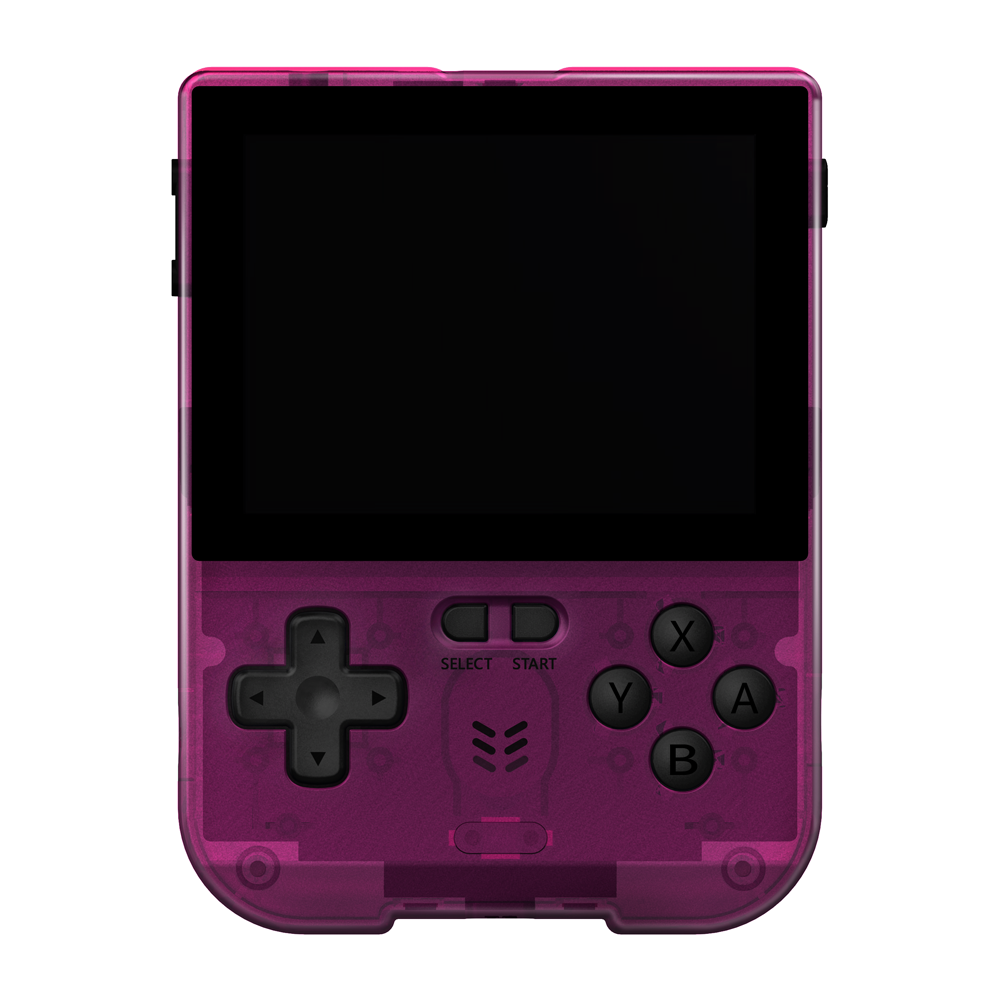
Device Overview: MagicX XU20 V32
The MagicX XU20 V32 (sold under the XU Retro badge) is a sub-$50 Android handheld built around one genuinely unusual decision for its price: a 3.2-inch, 1024×768 IPS panel with OCA full lamination. That works out to roughly 400 pixels per inch on a 4:3 screen, a density you normally do not meet until you spend three or four times as much. Almost everything else about the XU20 is ordinary budget hardware, and the device makes the most sense once you read it as a sharp little screen wrapped in the cheapest competent chassis MagicX could ship. It is a horizontal slab, about 112 x 83 x 24 mm and 157-160 g, with a full physical button layout plus a multi-touch display.
Emulation performance, generation by generation
The XU20 runs an Allwinner A133P: four Cortex-A53 cores at 1.8 GHz paired with an IMG PowerVR GE8300 GPU and 2 GB of DDR4. This is a low-power ARM SoC, not a Snapdragon, and every performance claim should be read through that lens. Eight- and sixteen-bit systems — NES, SNES, Genesis, Master System, PC Engine, and Game Boy through Game Boy Advance — run at full speed, and the 4:3 panel integer-scales them cleanly, which is the single best reason to own this thing. PlayStation 1 is comfortable through DuckStation or a RetroArch core. Past that it gets choppier. Nintendo 64 and Dreamcast are playable via Mupen64Plus and Flycast respectively, but “playable” here means the friendlier half of each library at a locked frame rate and the demanding titles at compromised speed. PSP through PPSSPP tells the same story: 2D and lighter 3D games are fine, while heavier 3D forces you down to native resolution and occasional dips. Saturn stays the coin-flip it always is. Anything beyond that generation — PS2, GameCube, Wii, 3DS, Switch — is out of reach, and no setting changes that. Treat PS1 as the comfort ceiling and N64, Dreamcast and PSP as bonus territory rather than the reason to buy.
Screen, build and controls
The panel is the headline and it earns it: 1024×768 with full lamination means no air gap and a genuinely crisp image, and the 4:3 shape matches nearly every pre-widescreen console pixel-for-pixel. The bezels around it are large, which undercuts the premium feel. The rest of the build is where the corners were cut. The face buttons use membrane contacts with a heavy initial press and a quick bottom-out rather than crisp microswitches; the d-pad is actually decent, with enough pivot for reliable diagonals; the shoulder buttons are clicky and sensibly angled. There are no analog sticks at all, which quietly rules out proper camera control in exactly the N64, PSP and Dreamcast games the chip can otherwise attempt. Audio comes from a single mono speaker. Ergonomics are eccentric — reviewers have flagged odd ridges near the “ears” and chin, a power button on the back, and microSD slots on opposite sides of the shell. A vibration motor is included.
Software and setup
The XU20 boots Android 10 directly from a microSD card, fronted by MagicX’s Dawn Launcher (an open-source frontend the company publishes on GitHub). Out of the box it points you at the Aurora Store, so you can pull down RetroArch, standalone DuckStation, PPSSPP and Flycast, or swap in a different frontend such as Daijisho or ES-DE. Here is the reality check for tinkerers: the A133P is neither a Rockchip RK3326/RK3566 nor the Allwinner H700 in Anbernic’s RG35XX line, so the familiar Linux custom-firmware menu simply does not apply. There is no muOS, Knulli, ArkOS, ROCKNIX or Batocera build for this device — Android is the platform, full stop. That is fine if you are happy configuring emulators inside Android, but do not buy the XU20 expecting to flash a slick Linux distro onto it. Setup work here means tuning per-emulator settings, not replacing the operating system.
Price, value and who it is for
The XU20 V32 launched around $48 and now sells closer to $43, with 64 GB or 128 GB storage options and microSD expansion up to 512 GB. A 3200 mAh battery delivers a realistic five to seven hours depending on brightness and how hard the emulator is pushed. At that price the value case is narrow but real: nothing else near $45 gives you a 4:3 screen this sharp. The trade-offs are equally concrete — mono sound, membrane face buttons, no analog sticks, 2.4 GHz-only Wi-Fi, and ergonomics you may need to make peace with. Buy it if you mostly play 2D systems and PS1, want a genuinely crisp pocket display for the money, and are comfortable living inside Android. Skip it if you need stick-driven games, a custom-firmware project to sink an afternoon into, or anything above PS1-era 3D running flawlessly.
📐 Size & Pocketability
⚖️ Weight vs Other Handhelds
🔋 Real-World Battery Estimator
⭐ Emulation Performance
📊 View How This Score is Calculated
The Hardware Power Score is an absolute metric. Perfect emulation of difficult, modern consoles awards significantly more points than standard retro consoles.
- 15× Multiplier: Modern PC
- 12× Multiplier: Switch, PS3, Xbox 360
- 10× Multiplier: Wii U
- 8× Multiplier: PS2, GameCube, Wii, Xbox
- 5× Multiplier: Saturn, Dreamcast, PSP
- 3× Multiplier: N64, PS1
- 1× Multiplier: SNES, GBA
Generation 6
Generation 5
Handhelds & Retro
⚡ Performance Benchmarks
Where MagicX XU20 V32 Imagination PowerVR GE8300 lands against the handhelds everyone knows. Every bar shares one scale, so longer genuinely means faster — add up to two rivals to compare.
CPU = Geekbench 6 multi-core · GPU = 3DMark Wild Life. Median real-world scores; every bar shares one scale — add up to two rivals to compare.
📋 Full Specifications
📺 Display
⚙️ Platform
💾 Memory
🕹️ Controls
📏 Body
🔋 Battery
⚖️ Verdict
✅ The Good
- Exceptionally sharp display for the money: a 3.2-inch, 1024×768, fully laminated 4:3 IPS panel (~400 ppi) that integer-scales retro systems cleanly
- Full-speed 8/16-bit and PlayStation 1 emulation, with playable N64, Dreamcast and PSP on the Allwinner A133P
- Genuinely cheap at roughly $43-48, offered in 64 GB or 128 GB versions with microSD expansion up to 512 GB
- Light (157-160 g) and pocketable, with a decent pivoting d-pad and well-angled shoulder buttons
❌ The Bad
- No analog sticks and only a mono speaker, which hobbles exactly the N64/PSP/Dreamcast games the chip could otherwise attempt
- Membrane face buttons and eccentric ergonomics (odd ear/chin ridges, a rear power button, SD slots split across the shell)
- Locked to stock Android 10 and the Dawn Launcher — no muOS, Knulli, ArkOS or other Linux custom firmware exists for the A133P
📰 Latest News & Guides
The Ultimate Guide to ARMSX3: Android’s New PS3 Emulator, Competitor Comparisons, and Setup Tutorial
18/08/2026Pokémon Gold, Silver, and Crystal (Gen 2) Recomp Lands on Android
17/08/2026How to Play the Pokémon Red, Blue, or Yellow Recomp on Your Android, Windows, and Linux Devices
16/08/2026🔍 Similar Handhelds
Other handhelds that emulate up to PSP.