
🛒 Where to Buy
⚠️ Golden Rule of Retro Handhelds: Throw away the cheap MicroSD card that comes in the box — it will fail. And never use a high-wattage PD “Fast Charger” on these devices; it can damage the battery. Use a standard 5V/1.5A brick.
Device Overview: GAMEMT E6 Plus
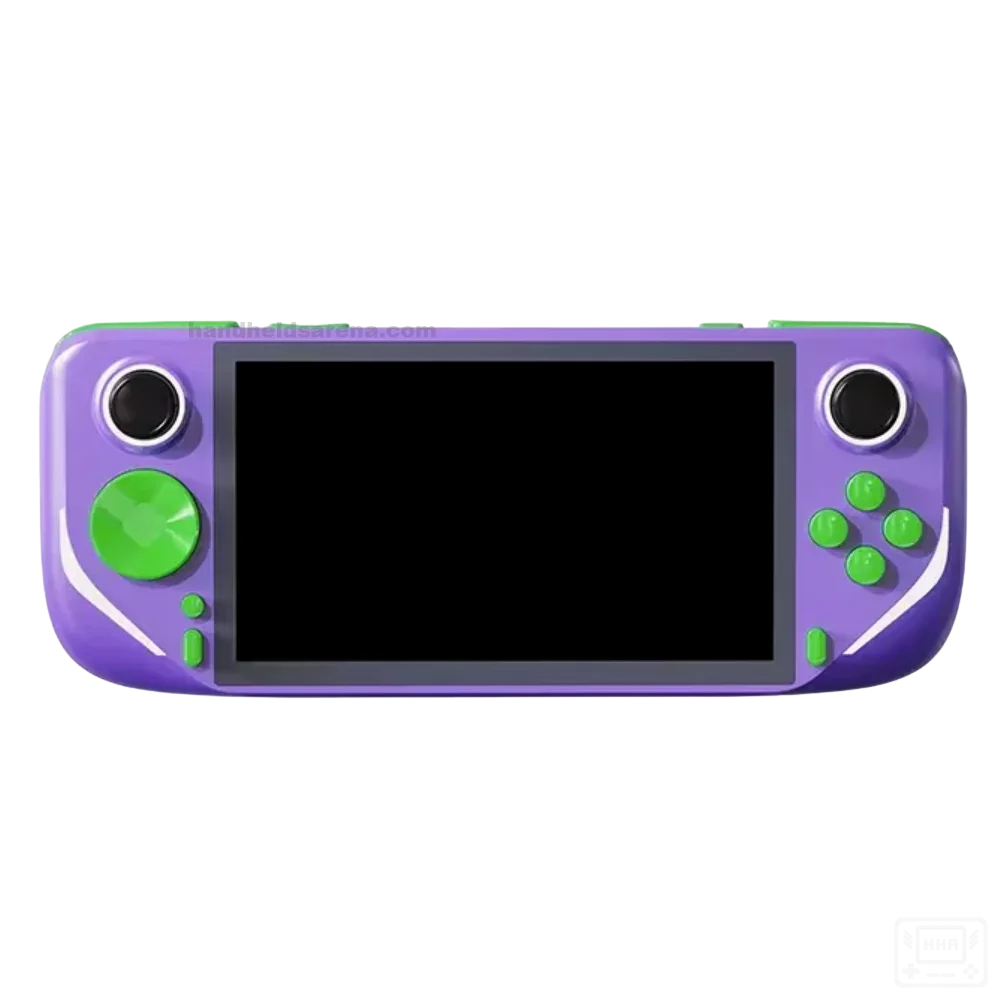
The GAMEMT E6 Plus is a June 2024 vertical-ish clamshell-free “landscape brick” from a low-profile Chinese brand, built on the Rockchip RK3566 and sold for somewhere around $75 (street listings swing from roughly $50 up to $100 depending on the bundled SD card). It is the larger sibling to the plain E6, and it competes in the same bargain-bin bracket as the Anbernic RG353V, the Powkiddy RGB30 and a dozen other RK3566 devices. What makes it stand out is not raw power but a 5-inch screen, dual-boot Android and Linux, and top-mounted joysticks. What holds it back is a D-pad that several reviewers rank among the worst they have touched. This is a device for tinkerers who want a big screen cheaply, not for anyone expecting polish out of the box.
Emulation performance, generation by generation
The RK3566 is a four-core ARM Cortex-A55 chip clocked to about 1.8 GHz, paired with a Mali-G52 2EE GPU and just 2 GB of LPDDR4X. That is an efficiency SoC, not a performance one, and it sets a hard ceiling. Everything through the 16-bit and 32-bit era runs flawlessly: NES, SNES, Genesis, Game Boy Advance, PC Engine and arcade all sit at full speed, and GBA in particular is where this hardware is happiest. PlayStation 1 via PCSX ReARMed is a non-issue. Nintendo 64 is the usual RK3566 lottery through Mupen64Plus, where Mario 64 and Zelda behave but heavier titles like Conker or Rogue Squadron stutter. Dreamcast through Flycast is genuinely playable, and reviewers clocked steady 60 fps on lighter games when running the Android build. PSP is the honest ceiling: PPSSPP will boot most of the library, but you are dropping to low internal resolution and accepting frame dips in demanding 3D games such as God of War. Saturn and anything past PSP are not realistic targets. Treat this as a machine that tops out at PSP and Dreamcast, and excels at everything below.
Screen, build and controls
The 5-inch IPS panel runs 1280×720, a genuine 16:9 aspect at roughly 294 ppi, protected by OCA-laminated tempered glass with touch support. That resolution is a real advantage over the 640×480 screens on many rivals, and PSP output in particular looks crisp because it maps close to native. The controls are where opinions split. GAMEMT went with an asymmetric top-mounted stick layout: a Hall-effect sensor stick on the left that resists drift, and an ordinary Switch-style potentiometer stick on the right, and the sticks are physically swappable. Both sit high on the face, which suits 3D and twin-stick play. The dome-style, circular D-pad is the problem. It is mushy, and it is far too easy to catch a stray down-input while pressing another direction, which sabotages fighting games and platformers, the exact genres where a d-pad matters most. L2/R2 are analog triggers, there is Mini HDMI out for the TV, and a 5000 mAh battery delivers a realistic four hours or so under load. Bright status LEDs bleed light around the shell, which annoys in a dark room. It measures about 163 x 79 x 16 mm.
Software and setup
The E6 Plus dual-boots Android 11 and a Linux build, and this split defines the ownership experience. Android 11 is not Play-certified, so the Google Play Store is unreliable and you end up sideloading APKs for RetroArch, standalone PPSSPP and Flycast, and any frontend you prefer. The Linux side ships as an ArkOS/JELOS-derived image on most units and boots straight into EmulationStation, which is the cleaner, faster experience for retro cores, though it lagged behind Android on the heavier Dreamcast and PSP titles in testing. Because the RK3566 is one of the best-supported chips in the hobby, you are not stuck with the stock firmware: ArkOS, ROCKNIX (the successor to JELOS), Batocera and Knulli all publish RK3566 images you can flash to a fresh card. Doing so is the single biggest upgrade you can make to this device, replacing the awkward stock menus with maintained, scraper-friendly software. Many units also ship with a 64 GB card claiming around 20,000 games of dubious legal provenance; wiping it for your own legally dumped ROMs and a clean CFW is the sensible first move.
Price, value and who it is for
At roughly $75 the E6 Plus is priced like the budget RK3566 device it is, and its pitch is simple: a 720p 5-inch screen and swappable Hall stick for less than a name-brand rival with a smaller panel. That is a real proposition if screen size is your priority and you are content to flash custom firmware. It is a poor pick for anyone who wants to open the box and play immediately, or who leans on the d-pad for 2D games, because the stock software is rough and the d-pad is a genuine liability. GAMEMT is also an obscure brand with thin documentation and limited English support, so community help is sparser than for Anbernic or Powkiddy hardware. Buy it if you are a tinkerer chasing a cheap big screen for PSP and below and you already know your way around ROCKNIX or ArkOS. Skip it if you want a refined handheld, and put the money toward an RG40XX or a used RG353 instead.
📐 Size & Pocketability
🔋 Real-World Battery Estimator
⭐ Emulation Performance
📊 View How This Score is Calculated
The Hardware Power Score is an absolute metric. Perfect emulation of difficult, modern consoles awards significantly more points than standard retro consoles.
- 15× Multiplier: Modern PC
- 12× Multiplier: Switch, PS3, Xbox 360
- 10× Multiplier: Wii U
- 8× Multiplier: PS2, GameCube, Wii, Xbox
- 5× Multiplier: Saturn, Dreamcast, PSP
- 3× Multiplier: N64, PS1
- 1× Multiplier: SNES, GBA
Generation 6
Generation 5
Handhelds & Retro
⚡ Performance Benchmarks
Where GAMEMT E6 Plus ARM Mali-G52 MP2 (2EE) lands against the handhelds everyone knows. Every bar shares one scale, so longer genuinely means faster — add up to two rivals to compare.
CPU = Geekbench 6 multi-core · GPU = 3DMark Wild Life. Median real-world scores; every bar shares one scale — add up to two rivals to compare.
📋 Full Specifications
📺 Display
⚙️ Platform
💾 Memory
🕹️ Controls
📏 Body
🔋 Battery
⚖️ Verdict
✅ The Good
- Large 5-inch 1280×720 IPS screen is sharper and bigger than most sub-$100 rivals
- Left Hall-effect stick resists drift, and both top-mounted sticks are physically swappable
- Dual-boots Android 11 and Linux, with full ArkOS, ROCKNIX, Batocera and Knulli support on the RK3566
- Handles everything through GBA and PS1 flawlessly, with playable Dreamcast and light PSP
❌ The Bad
- Circular dome D-pad is mushy and misfires downward, wrecking 2D and fighting games
- RK3566 with only 2 GB RAM tops out at PSP and Dreamcast, with N64 hit-or-miss
- Stock software is rough: Android 11 lacks Play certification and needs sideloading, and GAMEMT is an obscure brand with thin support and documentation
📰 Latest News & Guides
The Ultimate Guide to ARMSX3: Android’s New PS3 Emulator, Competitor Comparisons, and Setup Tutorial
18/08/2026Pokémon Gold, Silver, and Crystal (Gen 2) Recomp Lands on Android
17/08/2026How to Play the Pokémon Red, Blue, or Yellow Recomp on Your Android, Windows, and Linux Devices
16/08/2026🔍 Similar Handhelds
Other handhelds that emulate up to PSP.