
🛒 Where to Buy
⚠️ Golden Rule of Retro Handhelds: Throw away the cheap MicroSD card that comes in the box — it will fail. And never use a high-wattage PD “Fast Charger” on these devices; it can damage the battery. Use a standard 5V/1.5A brick.
Device Overview: AYN Thor
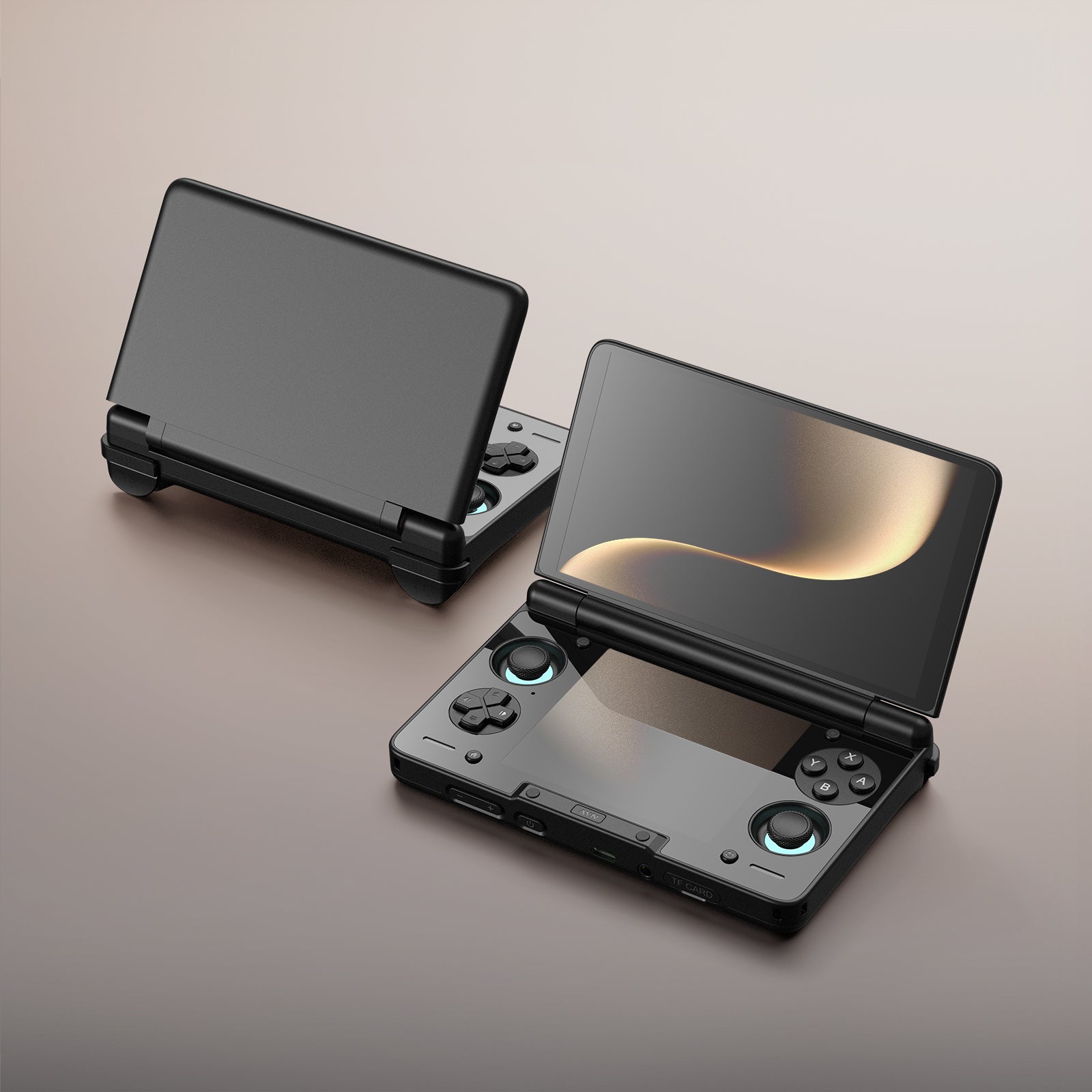
The AYN Thor is the rare clamshell that treats its second screen as a real feature rather than a gimmick. It pairs a 6-inch 1080p AMOLED lid with a 3.92-inch near-square AMOLED below it, and drives both from a Qualcomm Snapdragon 8 Gen 2, the same flagship silicon that powered 2023 Android phones. AYN shipped it in October 2025 into a category Nintendo abandoned when the 3DS died, and the whole pitch rests on one idea: an Android handheld built specifically to run dual-screen DS and 3DS games the way they were drawn. Everything else it does, and it does plenty, sits on top of that premise.
Emulation performance, generation by generation
Because the Thor runs a phone-class Snapdragon 8 Gen 2 with an Adreno 740 GPU, not a low-power Rockchip or Allwinner chip, its ceiling is genuinely high for an Android device. Everything through the fifth and sixth generations is trivial: NES, SNES, Genesis, PS1 on DuckStation, N64 on M64Plus FZ and Dreamcast on Flycast run at full speed with upscaling and shader headroom to spare. PSP through PPSSPP and Saturn are comfortable. The interesting tier is the sixth-to-seventh jump. PS2 on AetherSX2 or NetherSX2, and GameCube and Wii on Dolphin, run most of their libraries well, with the usual first-run shader stutter and a handful of demanding games such as God of War II that need settings tuning. Nintendo Switch is the real stretch: with Yuzu-derived forks like Citron or Sudachi, lighter titles are playable, but this is not a Switch machine and you should not buy it as one. Where the Thor genuinely leads is Nintendo 3DS. The vertical clamshell puts a real top-and-bottom screen arrangement under Citra, Lime3DS or Azahar, so games designed around two physical panels, the map below and the action above, finally play as intended instead of squashed into one display. It is the best portable 3DS experience I have used. x86 through Winlator works for lighter PC games, but treat that as a bonus, not a headline.
Screen, build and controls
Both panels are AMOLED, and both are good. The top is a customized 6-inch 1920×1080 unit running at 120Hz, vibrant with deep blacks; the bottom is a 3.92-inch touch AMOLED around 1240×1080 at 60Hz, sized and shaped for a DS/3DS lower screen or a control overlay. The sticks are Hall effect, the triggers are analog Hall effect linear pulls rather than digital clicks, and the d-pad has a crisp click that reviewers single out. It is not flawless. At 380 grams in a 150 x 94 x 25.6 mm clamshell, the Thor is heavy, and the right stick sits in an awkward reach for larger hands. Ergonomics are the recurring complaint, and an aftermarket grip meaningfully helps. The hinge feels solid; some early units showed cosmetic joint lines that AYN says are visible seams rather than structural cracks. A 6000mAh battery with 27W charging and an active cooling fan back the package, and the radios are current-generation Wi-Fi 7 and Bluetooth 5.3, which matters when you are streaming games or moving large ROM sets over the network rather than an SD card.
Software and setup
The Thor ships on Android 13 with AYN’s own launcher and a dual-screen layer that routes an app to whichever panel you opened it on and lets you set per-screen refresh. Here is the firmware reality to understand before buying: the Thor is an Android device, so the Linux custom-firmware world people associate with retro handhelds, muOS, Knulli, ArkOS, ROCKNIX, OnionOS, simply does not apply. Those exist for Rockchip and Allwinner Linux boards, not a Snapdragon Android tablet. You tune the Thor the Android way instead: install standalone emulators or RetroArch, add a frontend like Daijisho or ES-DE, and lean on Winlator for Windows titles. Setup is more hands-on than flashing a Batocera card, but the payoff is Play Store access, cloud-streaming apps and the full Android toolkit sitting alongside your ROMs. OTA updates have been frequent since launch.
Price, value and who it is for
Pricing starts at $249 for the Lite, a Snapdragon 865 variant, and $259 for the Snapdragon 8 Gen 2 Base with 8GB RAM and 128GB storage, climbing through the 12GB Pro to the 16GB Max at 512GB or 1TB of UFS 3.1. For a dual-AMOLED clamshell on flagship 2023 silicon, that is aggressive; a Snapdragon 8 Gen 2 phone once cost several times as much. The Thor is for one specific buyer: someone who plays a lot of DS and 3DS games and wants them on two real screens, and who will accept a chunky 380-gram body and Android’s do-it-yourself setup to get there. If you mostly want PS2 and PSP on a light single-screen slab, a cheaper flat handheld is the smarter buy. If the two-screen library is your whole reason for owning a handheld, nothing else at this price does it as well. The Thor is a focused tool that knows exactly what it is for, and it is refreshing to see a maker chase that instead of another identical flat slab.
📐 Size & Pocketability
⚖️ Weight vs Other Handhelds
🔋 Real-World Battery Estimator
⭐ Emulation Performance
📊 View How This Score is Calculated
The Hardware Power Score is an absolute metric. Perfect emulation of difficult, modern consoles awards significantly more points than standard retro consoles.
- 15× Multiplier: Modern PC
- 12× Multiplier: Switch, PS3, Xbox 360
- 10× Multiplier: Wii U
- 8× Multiplier: PS2, GameCube, Wii, Xbox
- 5× Multiplier: Saturn, Dreamcast, PSP
- 3× Multiplier: N64, PS1
- 1× Multiplier: SNES, GBA
Gen 8 & PC
Generation 7
Generation 6
Generation 5
Handhelds & Retro
⚡ Performance Benchmarks
Where AYN Thor Adreno 740 lands against the handhelds everyone knows. Every bar shares one scale, so longer genuinely means faster — add up to two rivals to compare.
CPU = Geekbench 6 multi-core · GPU = 3DMark Wild Life. Median real-world scores; every bar shares one scale — add up to two rivals to compare.
📋 Full Specifications
📺 Display
⚙️ Platform
💾 Memory
🕹️ Controls
📏 Body
🔋 Battery
⚖️ Verdict
✅ The Good
- Dual real AMOLED screens make it the best portable Nintendo DS and 3DS experience available, with the lower panel actually used as the game's second display.
- Flagship Snapdragon 8 Gen 2 with Adreno 740 pushes emulation to comfortable PS2, GameCube and Wii, plus playable lighter Switch titles.
- Hall effect sticks and analog Hall effect triggers mean no stick drift and true analog throttle and brake control.
- Aggressive pricing from $259 for an 8 Gen 2 dual-OLED clamshell, with full Android and Play Store access on top of your ROMs.
❌ The Bad
- Heavy at 380g with an awkward right-stick reach; ergonomics really want an aftermarket grip for long sessions.
- Being Android, it cannot run the popular Linux custom firmwares like muOS, Knulli or ROCKNIX, so setup is more manual than an SD-card flash.
- Not a true Switch machine; demanding eighth-gen and x86 titles are hit-or-miss even on the flagship chip.
📰 Latest News & Guides
The Ultimate Guide to ARMSX3: Android’s New PS3 Emulator, Competitor Comparisons, and Setup Tutorial
18/08/2026Pokémon Gold, Silver, and Crystal (Gen 2) Recomp Lands on Android
17/08/2026How to Play the Pokémon Red, Blue, or Yellow Recomp on Your Android, Windows, and Linux Devices
16/08/2026🔍 Similar Handhelds
Other handhelds that emulate up to CURRENTGEN.