
🛒 Where to Buy
⚠️ Golden Rule of Retro Handhelds: Throw away the cheap MicroSD card that comes in the box — it will fail. And never use a high-wattage PD “Fast Charger” on these devices; it can damage the battery. Use a standard 5V/1.5A brick.
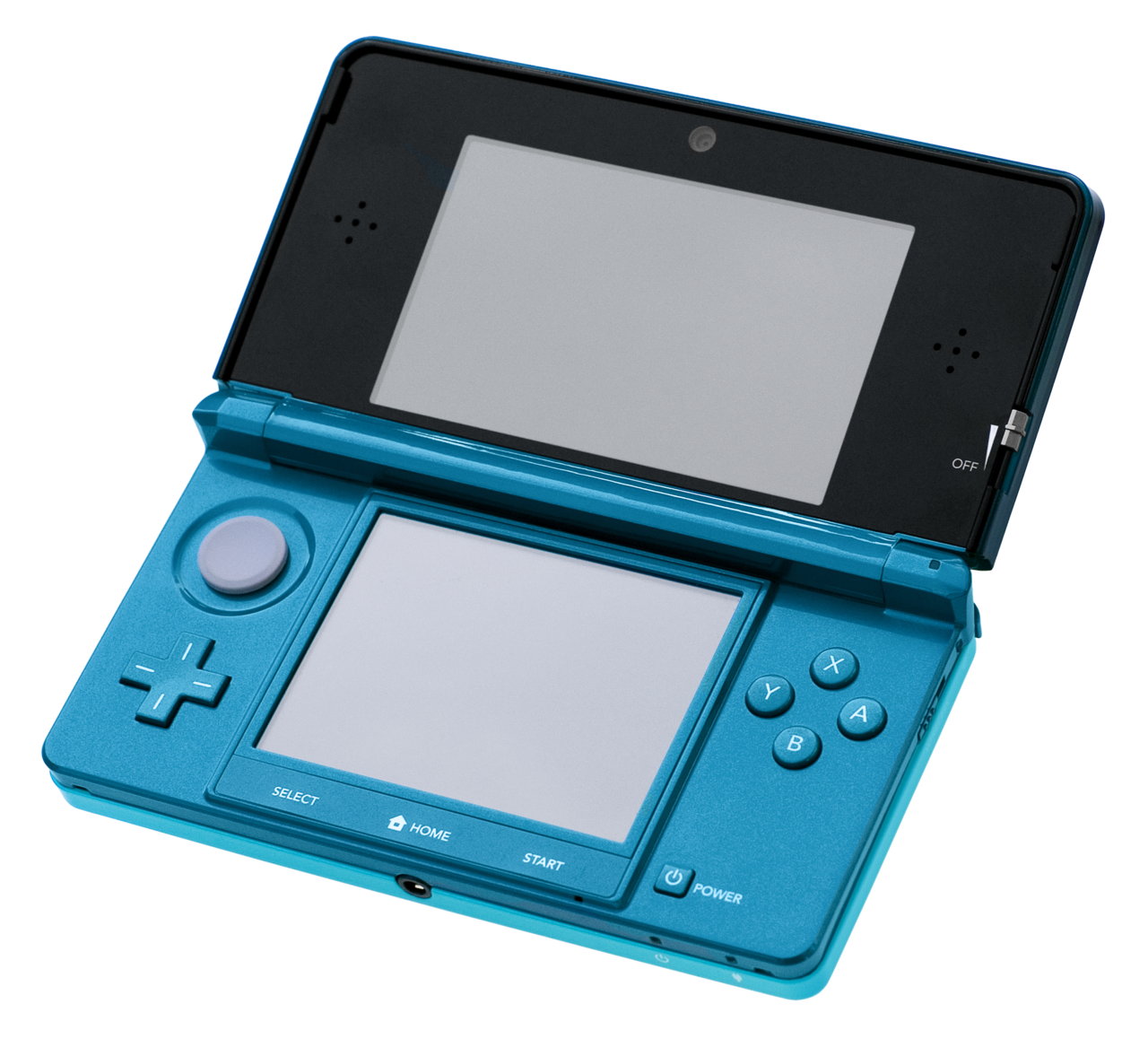
Device Overview: Nintendo 3DS XL
The Nintendo 3DS XL is the plus-size revision of the 2011 Nintendo 3DS, released in North America on 19 August 2012 at $199.99. Nintendo did not touch the silicon or the screen resolutions here; it simply enlarged the panels by roughly 90% and stretched the battery. One thing to nail down before anything else: this is the original 3DS XL, not the “New Nintendo 3DS XL” that arrived in 2014-2015. That distinction matters for performance, controls and price, and plenty of listings blur the two. This XL is the comfortable, big-screened way to play the standard 3DS generation, and little more.
The hardware and its library
Inside sits a dual-core ARM11 MPCore clocked at 268 MHz, a single-core ARM9 for security and DS compatibility, a Digital Media Professionals PICA200 GPU also at 268 MHz, 128 MB of FCRAM and 6 MB of VRAM. By 2012 those numbers were already modest, but the system was tuned tightly around its two small screens. The real reason to own one is the library. The 3DS XL plays every 3DS cartridge and, because the ARM9 and a DS-mode boot path are retained, the entire Nintendo DS catalogue too. The headline first-party run is genuinely strong: A Link Between Worlds, Fire Emblem Awakening, Pokemon X/Y and Sun/Moon, Animal Crossing New Leaf, Mario Kart 7, Super Mario 3D Land, Kid Icarus Uprising, Luigi’s Mansion Dark Moon and Bravely Default, alongside Monster Hunter and Shovel Knight. This was the last dedicated handheld generation Nintendo fully committed to before the Switch folded portable and console into one. Note that the 3DS eShop closed for purchases in March 2023, so digital buying is over and physical carts are now the way in.
Homebrew, custom firmware and emulation
The 3DS scene is mature and well-documented. The standard path is boot9strap installed via a software entry point such as seedminer, or via ntrboot using a modified DS flashcart, after which Luma3DS becomes the custom firmware that boots every time. Tools like GodMode9 and FBI handle backups and title installs, and the process is reversible. Emulation splits cleanly by era. Game Boy Advance runs superbly because the 3DS contains real GBA-compatible hardware; injected GBA titles execute in native AGB mode at full speed rather than being software-emulated. NES, SNES, Game Boy and Game Boy Color also run well through Virtual Console or RetroArch. Here the original XL’s weaker chip shows its limits: snes9x on this 268 MHz model can stutter in demanding scenes, whereas the later New 3DS with its 804 MHz quad-core ARM11 handles SNES cleanly and reaches lightly into harder systems. Genesis and PC Engine are fine; PlayStation 1 is a stretch and usually disappointing; Nintendo 64 is effectively a non-starter on this hardware. Treat the original 3DS XL as a superb machine for its own library and everything up to the 16-bit line, not as a pocket everything-emulator.
Screen, build and revisions
The top screen is a 4.88-inch autostereoscopic 3D LCD at 800×240 pixels, which splits to 400×240 per eye when the 3D slider is up. The bottom is a 4.18-inch 320×240 resistive touchscreen used with the stylus. Because the resolutions are identical to the smaller 3DS but spread across larger glass, pixel density drops and the image looks softer up close, though the bigger canvas is easier on the eyes for long sessions. The glasses-free 3D effect works but has a narrow viewing sweet spot on this model and induces eye strain for some players; most people leave it low or off. The clamshell shell is matte plastic that resists fingerprints better than the glossy standard 3DS. Controls are a single Circle Pad, D-pad, A/B/X/Y, and L/R shoulders, with no second stick and no ZL/ZR. Battery is a 1750 mAh cell rated at roughly 3.5 to 6.5 hours for 3DS software, and the unit weighs about 336 g. Revision history, briefly: original 3DS (2011), this 3DS XL (2012), the flat 2DS (2013), then the New 3DS and New 3DS XL (2014-2015) which added a C-stick nub, ZL/ZR triggers, amiibo NFC, faster silicon and face-tracking 3D, followed by the New 2DS XL.
Collecting, price and who it is for
On the used market the original 3DS XL typically runs about $90 to $160 depending on condition and colour, with special editions like the Zelda and Pokemon variants commanding clear premiums. The later New 3DS XL sells higher, often $180 to $300, because of the extra stick, the faster processor and the fact that a handful of games such as the Xenoblade Chronicles port only run on New models. Buy this original XL if you want the full 3DS and DS libraries on the largest comfortable screen, you value StreetPass-era nostalgia and you do not need New-3DS-exclusive titles. If your main goal is homebrew and heavier emulation, spend the extra and get a New 3DS XL instead; the CPU difference is the whole story. Either way, with the eShop shuttered, plan on collecting physical cartridges.
📐 Size & Pocketability
⚖️ Weight vs Other Handhelds
🔋 Real-World Battery Estimator
⭐ Emulation Performance
📊 View How This Score is Calculated
The Hardware Power Score is an absolute metric. Perfect emulation of difficult, modern consoles awards significantly more points than standard retro consoles.
- 15× Multiplier: Modern PC
- 12× Multiplier: Switch, PS3, Xbox 360
- 10× Multiplier: Wii U
- 8× Multiplier: PS2, GameCube, Wii, Xbox
- 5× Multiplier: Saturn, Dreamcast, PSP
- 3× Multiplier: N64, PS1
- 1× Multiplier: SNES, GBA
Gen 8 & PC
Generation 5
Handhelds & Retro
📋 Full Specifications
📺 Display
⚙️ Platform
💾 Memory
🕹️ Controls
📏 Body
🔋 Battery
⚖️ Verdict
✅ The Good
- Plays the entire 3DS and Nintendo DS libraries natively on large, comfortable screens
- Mature, reversible homebrew scene via boot9strap and Luma3DS with excellent GBA and 8/16-bit emulation
- Comfortable clamshell with a matte shell, 336 g weight and 3.5-6.5 hour battery for a big-screen handheld
- Cheaper on the used market than the later New 3DS XL while running the same core game catalogue
❌ The Bad
- Weaker 268 MHz dual-core CPU than the New 3DS XL, so SNES emulation can stutter and PS1/N64 are out of reach
- Missing the C-stick, ZL/ZR and NFC of New models, and cannot run New-3DS-exclusive titles
- Same resolution stretched over bigger panels lowers sharpness, and the glasses-free 3D has a narrow sweet spot with the eShop now closed
📰 Latest News & Guides
The Ultimate Guide to ARMSX3: Android’s New PS3 Emulator, Competitor Comparisons, and Setup Tutorial
18/08/2026Pokémon Gold, Silver, and Crystal (Gen 2) Recomp Lands on Android
17/08/2026How to Play the Pokémon Red, Blue, or Yellow Recomp on Your Android, Windows, and Linux Devices
16/08/2026🔍 Similar Handhelds
Other handhelds that emulate up to 3DS.