
🛒 Where to Buy
⚠️ Golden Rule of Retro Handhelds: Throw away the cheap MicroSD card that comes in the box — it will fail. And never use a high-wattage PD “Fast Charger” on these devices; it can damage the battery. Use a standard 5V/1.5A brick.
Device Overview: Nintendo DS Lite
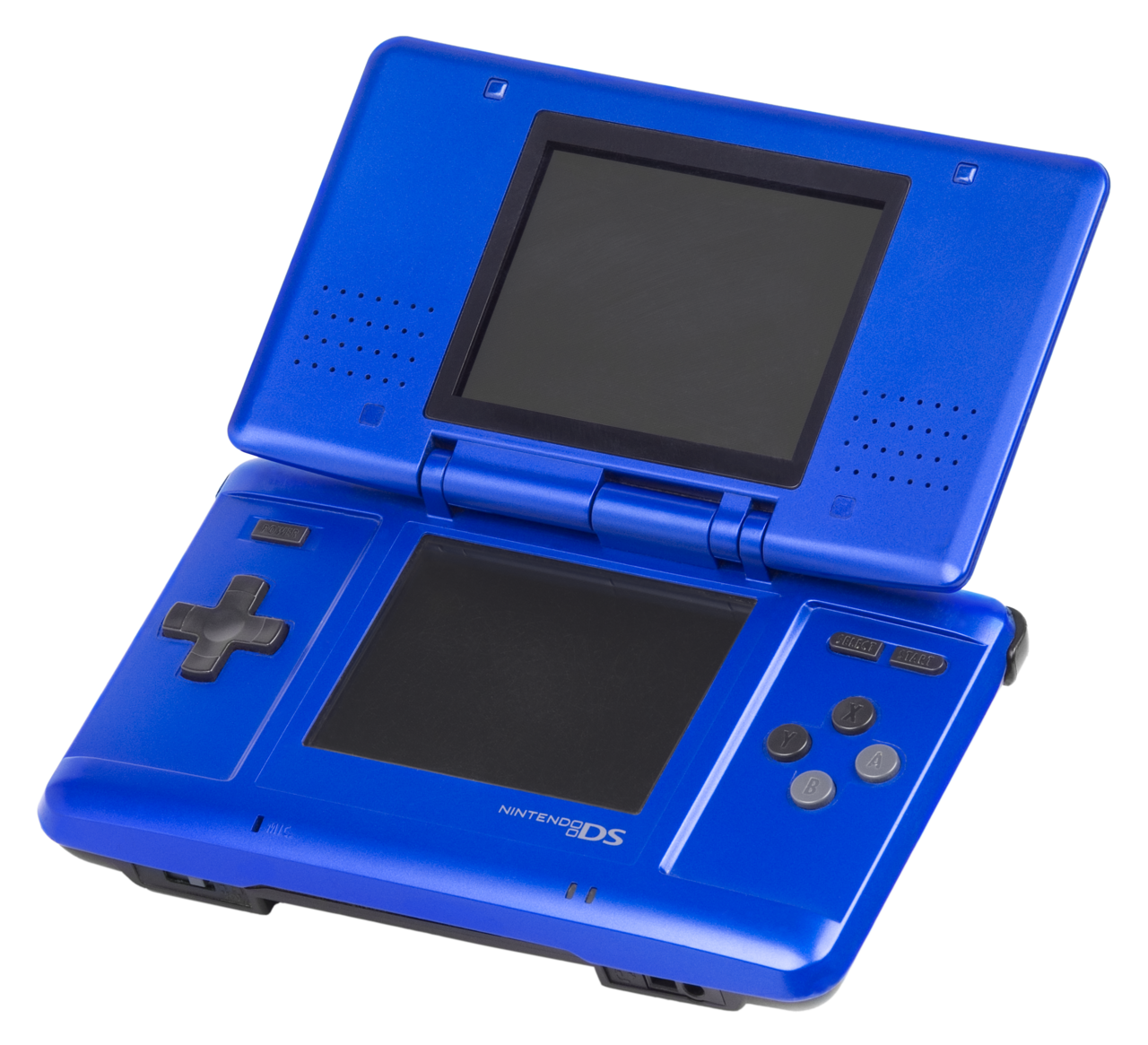
The Nintendo DS Lite is the redesign that turned the DS from an awkward grey brick into the handheld tens of millions of people actually carried. It shipped in Japan on 2 March 2006 and reached North America on 11 June 2006 at $129.99, about eighteen months after the original “Phat” DS. Crucially, it is not a faster machine. Nintendo kept the exact silicon of the 2004 DS and rebuilt the shell around it: slimmer, lighter, far brighter. If you want the definitive way to play the DS library on original hardware, this is the model most people mean when they say “a DS.”
The hardware and its library
Inside are two ARM cores, an ARM946E-S running at 67 MHz and an ARM7TDMI at 33 MHz, paired with just 4 MB of PSRAM. Those numbers are tiny even by 2006 standards, and they are identical to the launch DS, the Lite added no horsepower. What the DS did with that modest budget was lean on two 256×192 screens, a resistive touchscreen on the bottom, a microphone and local wireless, then let developers build things no other console could run. The result is one of the deepest libraries in handheld history: New Super Mario Bros., Mario Kart DS, the Pokemon Diamond/Pearl through Black/White generations, Advance Wars: Dual Strike, Castlevania: Dawn of Sorrow, The World Ends With You, Chrono Trigger DS, the Professor Layton and Phoenix Wright series, and oddities like Nintendogs and Brain Age that sold to people who had never owned a console. The Slot-2 cartridge port also plays original Game Boy Advance carts in hardware, not through emulation, though the cart sticks out past the frame and there is no GBA link-cable support. Game Boy and Game Boy Color carts are not compatible, since Nintendo dropped the older Z80-derived core that the GBA still carried. That single omission is why a DS Lite alone cannot be a full “every Nintendo handheld” machine.
Homebrew, custom firmware and emulation
The DS scene never needed an Atmosphere-style custom firmware because the console has no signed internal storage to defeat. Everything runs off a Slot-1 flashcart, an R4, Acekard 2i, DSTT or Supercard, that boots homebrew and backups straight from microSD. That simplicity is exactly why DS flashcarts became infamous. Homebrew highlights include Moonshell as a media player, DSOrganize, and a stack of small emulators. Be realistic about what the 67 MHz chip can emulate on-device, though. NES (nesDS), Game Boy and Game Boy Color (Lameboy DS), and Master System/Game Gear run at or near full speed; Genesis via jEnesisDS is playable but drops frames; and SNES emulation is effectively a non-starter, since snesDS is a tech demo rather than a way to actually play. In practice the DS Lite is more often the thing being emulated than the thing doing the emulating: DeSmuME and melonDS on PC, or melonDS and DraStic on Android, run the DS library far better than the handheld runs anyone else’s. Note too that Nintendo Wi-Fi Connection was shut down in 2014, so online modes are gone, while local wireless multiplayer still works.
Screen, build and revisions
The Lite’s headline upgrade was its display. Both 3-inch TFT panels gained a four-level adjustable backlight, where the original DS had a single dim setting, with the top screen rated around 200 cd/m2. It is genuinely bright, and it made the same games look dramatically better. The chassis shrank to 133 x 73.9 x 21.5 mm and 218 g, down from the 275 g launch model, with a 1000 mAh battery good for roughly 15 to 19 hours at the lowest brightness and 5 to 8 hours at the highest. In the family line the Lite sits between the “Phat” DS and the later DSi and DSi XL, and it came in a long run of colours: Polar White and Onyx first, then Crimson/Black, Cobalt/Blue, Metallic Rose, Ice Blue, Gloss Silver, and dozens of Pokemon and Zelda special editions. Two weaknesses are worth knowing before you buy: the top hinge is prone to hairline cracks, and the shoulder buttons get intermittent as dust works into them.
Collecting, price and who it is for
The DS Lite sold on the order of 90-plus million units, so it is common and cheap. Working examples typically run about $40 to $90 depending on colour and condition, with sealed or rare special editions climbing well past that. Buy one if you want to play the actual DS and GBA catalogues on the screens and controls they were designed for, or if you want the least fussy flashcart platform Nintendo ever shipped. Skip it if you mainly want to emulate other systems, because a cheap modern Linux handheld will humiliate it, or if online multiplayer matters, since those servers are long dead. The DSi and DSi XL that followed added cameras, DSiWare downloads and a slightly faster chip, but they dropped the GBA slot, so many collectors still keep a Lite specifically for that backward compatibility. For its intended job, running one of the best software libraries ever assembled, the DS Lite is still the model to own.
📐 Size & Pocketability
⚖️ Weight vs Other Handhelds
🔋 Real-World Battery Estimator
⭐ Emulation Performance
📊 View How This Score is Calculated
The Hardware Power Score is an absolute metric. Perfect emulation of difficult, modern consoles awards significantly more points than standard retro consoles.
- 15× Multiplier: Modern PC
- 12× Multiplier: Switch, PS3, Xbox 360
- 10× Multiplier: Wii U
- 8× Multiplier: PS2, GameCube, Wii, Xbox
- 5× Multiplier: Saturn, Dreamcast, PSP
- 3× Multiplier: N64, PS1
- 1× Multiplier: SNES, GBA
Gen 8 & PC
Handhelds & Retro
📋 Full Specifications
📺 Display
⚙️ Platform
💾 Memory
🕹️ Controls
📏 Body
🔋 Battery
⚖️ Verdict
✅ The Good
- Plays the full DS library on original dual screens, touchscreen and microphone, plus hardware Game Boy Advance cartridge support through the Slot-2 port
- Bright four-level backlight and a 218 g body make it far more comfortable to hold and see than the original "Phat" DS
- No custom firmware needed: a single Slot-1 flashcart runs homebrew and backups straight from microSD
- Abundant and inexpensive on the used market, making it one of the best-value ways into retro handhelds
❌ The Bad
- The 67 MHz ARM CPU and 4 MB of RAM cannot emulate SNES or anything more demanding than 8-bit and marginal early-16-bit systems on-device
- Nintendo Wi-Fi Connection servers were shut down in 2014, so most online modes are permanently gone
- Cracked top hinges and dust-clogged, intermittent shoulder buttons are common failure points on aging units
📰 Latest News & Guides
The Ultimate Guide to ARMSX3: Android’s New PS3 Emulator, Competitor Comparisons, and Setup Tutorial
18/08/2026Pokémon Gold, Silver, and Crystal (Gen 2) Recomp Lands on Android
17/08/2026How to Play the Pokémon Red, Blue, or Yellow Recomp on Your Android, Windows, and Linux Devices
16/08/2026🔍 Similar Handhelds
Other handhelds that emulate up to DS.