
🛒 Where to Buy
⚠️ Golden Rule of Retro Handhelds: Throw away the cheap MicroSD card that comes in the box — it will fail. And never use a high-wattage PD “Fast Charger” on these devices; it can damage the battery. Use a standard 5V/1.5A brick.
Device Overview: Sony Ericsson Xperia Play
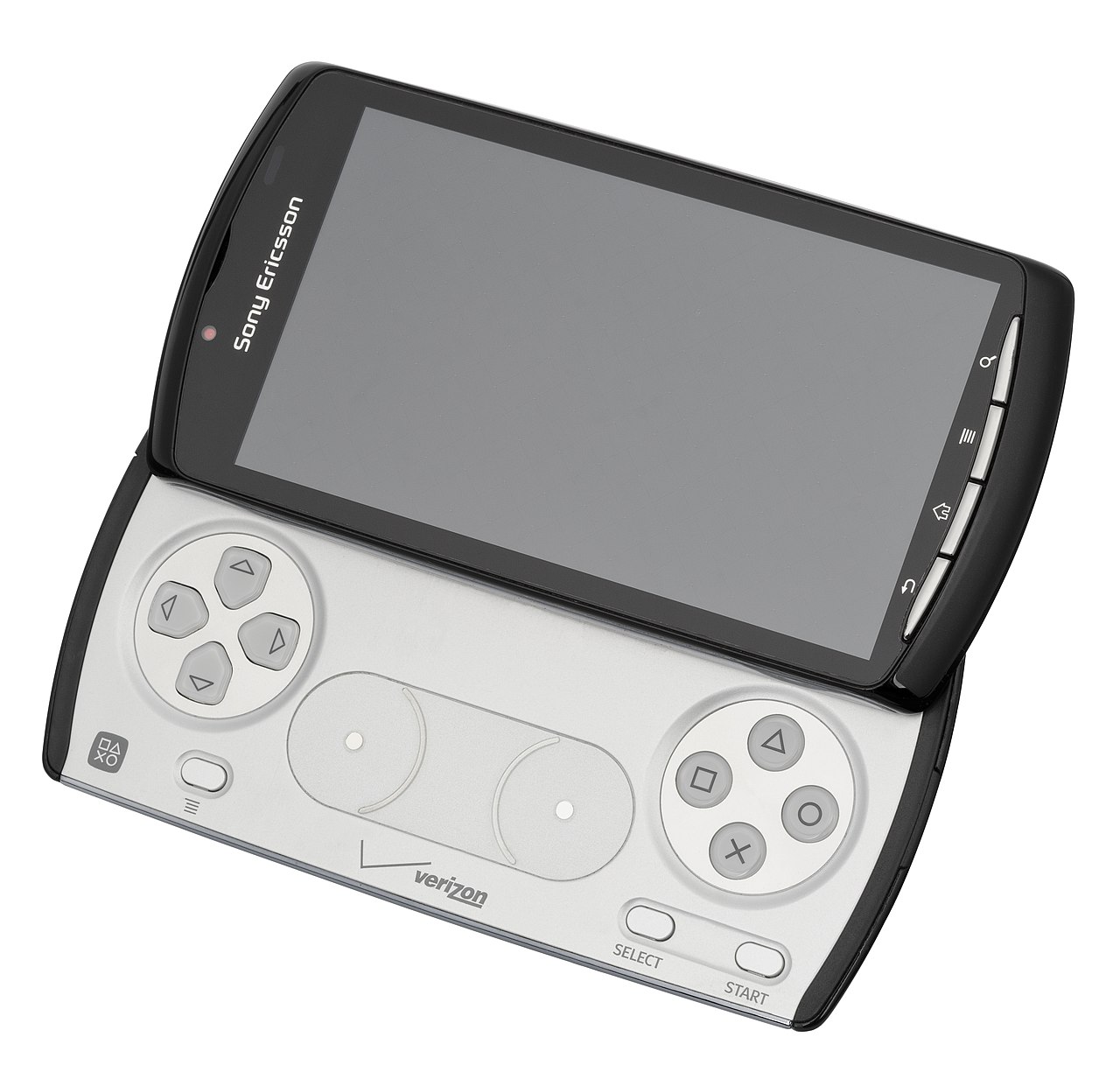
The Sony Ericsson Xperia Play was the “PlayStation Phone” that leaked for years before it finally shipped in 2011. It is not a dedicated console in the mould of a PSP or a Vita; it is an Android 2.3 Gingerbread smartphone with a slide-out gamepad and Sony’s first “PlayStation Certified” badge. That distinction matters, because the Play’s whole identity rests on the mechanical gamepad hidden under the screen and on a small library of games written to use it. As a phone it was mid-range even for its day. As a pocket game machine it was ambitious, undercooked, and abandoned faster than its owners deserved.
The hardware and its library
Under the hood sits a single-core 1 GHz Qualcomm Snapdragon S2 (MSM8255) Scorpion CPU with an Adreno 205 GPU and just 512 MB of RAM. Internal storage is a laughable 400 MB, offloaded to a microSD card (an 8 GB card was bundled). Even in 2011 this was modest silicon: dual-core phones like the Galaxy S II shipped the same year and ran circles around it. The slide-out controller is the reason to care. You get a genuine cross d-pad, the four PlayStation face buttons (triangle, circle, cross, square), two shoulder buttons on the back edge, and Start, Select and Menu keys. What you do not get is real analog sticks. Sony instead used two flat circular touch-sensitive pads in the centre, and they are the device’s biggest hardware compromise, imprecise and hard to feel without looking. The native “library” was a curated set of roughly fifty Android titles optimised for the pad at launch, mostly Gameloft ports and mobile originals, plus a PlayStation Pocket launcher offering a handful of PS One classics. Crash Bandicoot came preloaded in many regions and was the demo everyone remembers.
Homebrew, custom firmware and emulation
Because this is Android, its “custom firmware” scene is really the ROM-modding scene, and it was lively. Sony’s own bootloader-unlock tool let tinkerers flash away, and the FreeXperia and CyanogenMod teams gave the Play the software support Sony refused to: CyanogenMod 7 (Gingerbread), then CyanogenMod 9 on Android 4.0 Ice Cream Sandwich, and eventually CyanogenMod 10 on Jelly Bean. Sony officially cancelled the promised ICS update in May 2012, so those community builds were the only way to move past 2.3.4, with the usual caveats: early CM9 builds shipped with Wi-Fi or camera broken. Emulation is where the physical pad finally pays off. FPse runs the great majority of PlayStation One games at or near full speed, and 8- and 16-bit systems (NES, SNES, Genesis, Game Boy, GBA) are trivial for the Adreno 205. RetroArch arrived later and made setup tidier once you were on a Jelly Bean ROM. The ceiling is honest, though: the single core and 512 MB of RAM mean Nintendo 64 is a mixed bag, PSP emulation via PPSSPP is a slideshow on anything demanding, and Dreamcast is out of reach. This is a PS1-and-below machine with a real controller, which is genuinely the sweet spot for handheld emulation.
Screen, build and revisions
The display is a 4.0-inch TFT LCD at 854 x 480 (FWVGA, about 245 ppi) with a capacitive touchscreen on the front. It is sharp enough for the era but dim and washed-out next to the AMOLED panels of contemporaries, and there is no getting around that it is only a 60 Hz LCD. The slider mechanism is the make-or-break element of the build: it feels solid when new but is the first thing to wear, and a wobbly or crunchy slide is common on used units today. The whole thing weighs 175 g and measures 16 mm thick, chunky by phone standards because of the drawer inside. Power comes from a removable 1500 mAh battery, which is the device’s quiet strength: you can carry a spare, something no modern handheld allows. Regional revisions matter for buyers. The R800i is the global GSM model, the R800x is Verizon’s CDMA version, and AT&T sold an “Xperia Play 4G” (R800at) with HSPA+ branding. Sony Ericsson also became simply Sony partway through the phone’s life, so listings vary in naming.
Collecting, price and who it is for
At launch the Play was $199.99 on a two-year Verizon contract (in stores 26 May 2011) and roughly £499 or €599 SIM-free. Today it is a cheap curio, typically changing hands for USD 40 to 90 depending on condition, with boxed or mint units asking more from collectors of gaming-phone oddities. Buy carefully: check the slider action, expect the ageing battery to be tired (though it is user-replaceable), and assume you will flash a community ROM to make it pleasant. Who is it for in 2026? Not anyone wanting a daily phone, and not anyone who wants smooth PSP or N64 play; a modern Anbernic or Retroid does that for similar money with far better screens and analog sticks. It is for collectors and tinkerers who want the original PlayStation Phone, the physical PlayStation pad, and a working FPse setup for PS1 on the exact hardware Sony built to run it. On those terms it still delivers a small, specific thrill.
📐 Size & Pocketability
⚖️ Weight vs Other Handhelds
🔋 Real-World Battery Estimator
⭐ Emulation Performance
📊 View How This Score is Calculated
The Hardware Power Score is an absolute metric. Perfect emulation of difficult, modern consoles awards significantly more points than standard retro consoles.
- 15× Multiplier: Modern PC
- 12× Multiplier: Switch, PS3, Xbox 360
- 10× Multiplier: Wii U
- 8× Multiplier: PS2, GameCube, Wii, Xbox
- 5× Multiplier: Saturn, Dreamcast, PSP
- 3× Multiplier: N64, PS1
- 1× Multiplier: SNES, GBA
Gen 8 & PC
Generation 6
Generation 5
Handhelds & Retro
📋 Full Specifications
📺 Display
⚙️ Platform
💾 Memory
🕹️ Controls
📏 Body
🔋 Battery
⚖️ Verdict
✅ The Good
- Genuine slide-out PlayStation gamepad with real d-pad, four face buttons and shoulder buttons
- Runs PlayStation One (via FPse) and all 8/16-bit systems at or near full speed
- Strong community support: CyanogenMod brought ICS and Jelly Bean after Sony gave up
- Removable 1500 mAh battery you can swap, plus microSD expansion
❌ The Bad
- Analog input is two flat touch-sensitive pads, not real sticks, and they feel imprecise
- Single-core Snapdragon S2 with 512 MB RAM caps it at PS1; N64/PSP/Dreamcast are out
- Sony cancelled the official Ice Cream Sandwich update, leaving stock units stranded on Gingerbread
📰 Latest News & Guides
The Ultimate Guide to ARMSX3: Android’s New PS3 Emulator, Competitor Comparisons, and Setup Tutorial
18/08/2026Pokémon Gold, Silver, and Crystal (Gen 2) Recomp Lands on Android
17/08/2026How to Play the Pokémon Red, Blue, or Yellow Recomp on Your Android, Windows, and Linux Devices
16/08/2026🔍 Similar Handhelds
Other handhelds that emulate up to N64.